Zhengzhou Protech
Home > News

Product

Contact Us

Leave Message

Contact Us

All products are customizable, leave message immediately, we will reply as soon as possible.

Name

Tel/WhatsApp

E-mail *

Country *

Raw Materia

Message *

Verification code *

I can't see clearly, refresh

Low-Temp Sintering Operation of Quartz Tube Furnace: Sample Placement and Atmosphere Protection Guide

For your custom heating needs, reach us here:
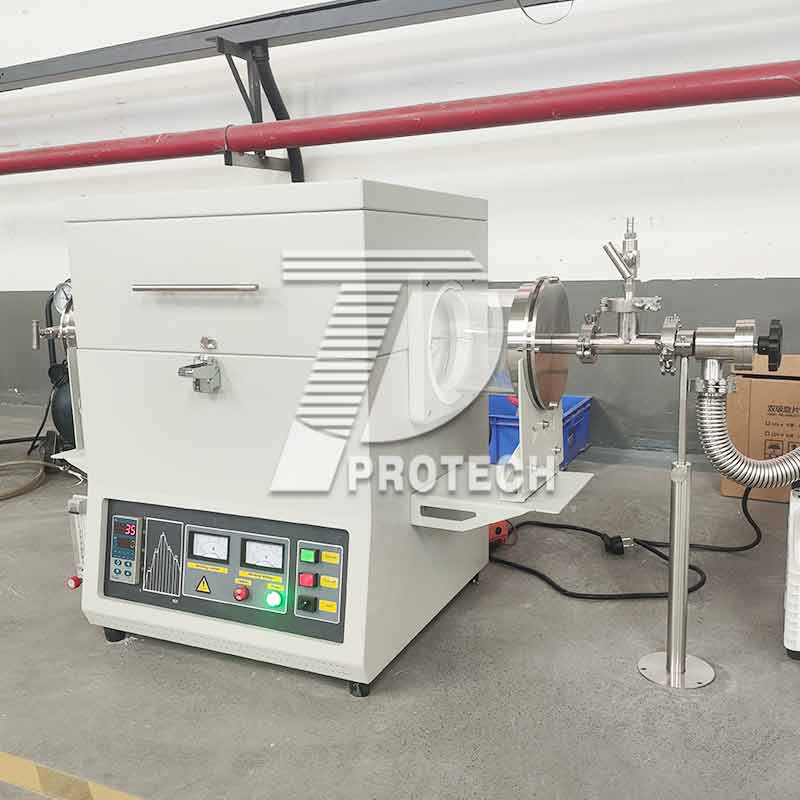
1. Overview of Low-Temperature Sintering Process Characteristics of Quartz Tube FurnaceYNRMuffle Furnace,Tube Furnace,Vacuum Furnace,Atmosphere Furnac
YNRMuffle Furnace,Tube Furnace,Vacuum Furnace,Atmosphere Furnac
1.1 Core Application Scenarios of Low-Temperature SinteringYNRMuffle Furnace,Tube Furnace,Vacuum Furnace,Atmosphere Furnac
Quartz tube furnace low-temperature sintering refers to thermal treatment below 600℃, which is widely used for material drying, pre-sintering, surface modification and low-temperature phase transformation, with strict requirements on sample uniformity and atmosphere stability.YNRMuffle Furnace,Tube Furnace,Vacuum Furnace,Atmosphere Furnac
Different from high-temperature crystallization and carbonization processes, low-temperature sintering of quartz tube furnace focuses on mild thermal treatment, which is suitable for heat-sensitive materials such as organic composite materials, precursor powders, low-melting ceramic raw materials and flexible functional materials. The process is mainly used to remove residual moisture, solvent and internal stress of samples, complete preliminary bonding and structural shaping, and lay a foundation for subsequent high-temperature treatment or finished product preparation. With the advantages of uniform temperature field, adjustable atmosphere and low thermal shock, quartz tube furnace is the mainstream equipment for laboratory low-temperature sintering and small-batch precision production.
YNRMuffle Furnace,Tube Furnace,Vacuum Furnace,Atmosphere Furnac
 
quartz tube furnace
YNRMuffle Furnace,Tube Furnace,Vacuum Furnace,Atmosphere Furnac
1.2 Key Technical Characteristics and Process ThresholdsYNRMuffle Furnace,Tube Furnace,Vacuum Furnace,Atmosphere Furnac
Low-temperature sintering relies on stable low-gradient heating and oxygen-free atmosphere environment, and unstandardized sample placement and gas protection are the main causes of poor batch consistency.YNRMuffle Furnace,Tube Furnace,Vacuum Furnace,Atmosphere Furnac
The core difference between low-temperature sintering and high-temperature process is that the material reaction is mild and the temperature difference sensitivity is extremely high. Slight deviation in sample placement spacing, position deviation and uneven gas flow will lead to inconsistent volatilization rate and thermal stress of different samples, resulting in problems such as uneven surface color, incomplete degassing and inconsistent structural compactness. In addition, low-temperature stage is prone to residual air and moisture retention in the furnace tube. Improper atmosphere replacement will cause slight oxidation and sample contamination, which seriously affects the precision of low-temperature sintering process.YNRMuffle Furnace,Tube Furnace,Vacuum Furnace,Atmosphere Furnac
YNRMuffle Furnace,Tube Furnace,Vacuum Furnace,Atmosphere Furnac
1.3 Standardized Operation Value of Sintering ProcessYNRMuffle Furnace,Tube Furnace,Vacuum Furnace,Atmosphere Furnac
Standard sample placement and precise atmosphere protection technology are the core guarantees to eliminate low-temperature sintering defects and improve experimental repeatability.YNRMuffle Furnace,Tube Furnace,Vacuum Furnace,Atmosphere Furnac
In actual operation, most low-temperature sintering failures are not caused by equipment parameter errors, but by irregular manual placement and incomplete gas replacement. Formulating unified sample placement specifications, spacing standards and atmosphere purging processes can effectively solve common defects such as sample oxidation, uneven heating and incomplete degassing, ensure stable and consistent sintering quality of each batch of samples, reduce experimental repetition rate, and form replicable standardized low-temperature sintering process formulas.
YNRMuffle Furnace,Tube Furnace,Vacuum Furnace,Atmosphere Furnac
2. Standardized Placement Specifications and Operating Essentials for SamplesYNRMuffle Furnace,Tube Furnace,Vacuum Furnace,Atmosphere Furnac
2.1 Furnace Tube Temperature Zone Distribution and Placement PrincipleYNRMuffle Furnace,Tube Furnace,Vacuum Furnace,Atmosphere Furnac
The quartz tube furnace has an effective constant temperature zone in the middle and variable temperature zones at both ends. All low-temperature sintered samples must be concentrated in the constant temperature zone to ensure uniform heating.YNRMuffle Furnace,Tube Furnace,Vacuum Furnace,Atmosphere Furnac
The internal temperature field of the quartz tube furnace is distributed in a gradient structure. The middle section of the furnace tube is the effective constant temperature zone with small temperature fluctuation and uniform heat transfer, which is the only effective area for low-temperature sintering. The two ends of the furnace tube are affected by heat dissipation and cold air conduction, belonging to the variable temperature zone with large temperature difference. Placing samples in the variable temperature zone will lead to serious uneven heating, inconsistent reaction degree of internal and external samples, and batch quality divergence. Before sample placement, the effective constant temperature range of the equipment shall be calibrated according to the furnace body model, and all samples shall be placed within the fixed temperature zone range in a centralized manner.YNRMuffle Furnace,Tube Furnace,Vacuum Furnace,Atmosphere Furnac
YNRMuffle Furnace,Tube Furnace,Vacuum Furnace,Atmosphere Furnac
2.2 Single and Batch Sample Placement StandardsYNRMuffle Furnace,Tube Furnace,Vacuum Furnace,Atmosphere Furnac
Follow the principles of center alignment, equal spacing and non-overlapping placement to avoid local heat accumulation and gas flow dead zones.YNRMuffle Furnace,Tube Furnace,Vacuum Furnace,Atmosphere Furnac
For single sample sintering, the sample shall be placed in the geometric center of the constant temperature zone, keeping horizontal and stable, without tilting and contacting the tube wall. For batch sample processing, uniform spacing layout shall be adopted, with a reserved gap of 5–10 mm between samples to ensure smooth gas circulation and uniform heat conduction. Overly dense placement will form internal gas dead zones, resulting in incomplete discharge of volatile gas and residual moisture; overly sparse placement will reduce production efficiency and cause inconsistent temperature response of individual samples. Flat samples shall be placed horizontally, and vertical samples shall be kept upright to avoid overlapping shading and uneven heating.YNRMuffle Furnace,Tube Furnace,Vacuum Furnace,Atmosphere Furnac
YNRMuffle Furnace,Tube Furnace,Vacuum Furnace,Atmosphere Furnac
2.3 Auxiliary Tool Use and Placement TaboosYNRMuffle Furnace,Tube Furnace,Vacuum Furnace,Atmosphere Furnac
Select high-purity quartz ark and matched auxiliary tools, strictly avoid tube wall contact, vibration displacement and foreign matter contamination.YNRMuffle Furnace,Tube Furnace,Vacuum Furnace,Atmosphere Furnac
Low-temperature sintering samples must be placed in a clean quartz crucible or quartz ark, and it is forbidden to directly contact the inner wall of the furnace tube to prevent scratching the quartz tube and causing sample cross-contamination. Before placement, check the cleanliness of the quartz ark, remove residual powder and volatile deposits, and ensure the surface is dry and pollution-free. During sample feeding, push and pull gently to avoid violent vibration causing sample displacement and powder scattering. It is forbidden to place wet samples, samples with volatile corrosive substances and oversized samples beyond the constant temperature zone to prevent process failure and equipment damage.YNRMuffle Furnace,Tube Furnace,Vacuum Furnace,Atmosphere Furnac
YNRMuffle Furnace,Tube Furnace,Vacuum Furnace,Atmosphere Furnac
3. Low-Temperature Sintering Atmosphere Protection Process SystemYNRMuffle Furnace,Tube Furnace,Vacuum Furnace,Atmosphere Furnac
3.1 Conventional Atmosphere Type and Applicable Scenarios
YNRMuffle Furnace,Tube Furnace,Vacuum Furnace,Atmosphere Furnac
Inert atmosphere is the mainstream protection mode for low-temperature sintering, and vacuum-assisted gas replacement is adopted according to sample oxidation sensitivity.YNRMuffle Furnace,Tube Furnace,Vacuum Furnace,Atmosphere Furnac
Low-temperature sintering protection atmosphere is mainly divided into nitrogen and argon inert atmosphere, which is suitable for anti-oxidation and pollution-free sintering of most powder materials, thin film materials and composite precursors. Nitrogen atmosphere is cost-effective and suitable for conventional low-temperature sintering and drying processes; argon atmosphere has higher purity and better stability, suitable for high-precision sensitive material treatment. For materials that are extremely easy to oxidize and hydrolyze, vacuum pre-purging + inert gas filling composite process is required to ensure low-oxygen and low-humidity environment in the furnace tube.YNRMuffle Furnace,Tube Furnace,Vacuum Furnace,Atmosphere Furnac
YNRMuffle Furnace,Tube Furnace,Vacuum Furnace,Atmosphere Furnac
3.2 Standard Atmosphere Purging and Replacement ProcessYNRMuffle Furnace,Tube Furnace,Vacuum Furnace,Atmosphere Furnac
Adopt cyclic vacuum purging or constant-flow gas replacement to completely eliminate residual air and moisture, and avoid low-temperature oxidation and sample defection.YNRMuffle Furnace,Tube Furnace,Vacuum Furnace,Atmosphere Furnac
For conventional low-temperature sintering with low oxidation sensitivity, continuous constant-flow purging can be used. After feeding, pre-purge for 10–15 minutes to discharge residual air in the tube, and then start heating program. For high-precision anti-oxidation sintering, cyclic vacuum purging is adopted: vacuumize to negative pressure, fill with inert gas to normal pressure, and repeat 2–3 times to reduce internal oxygen content and humidity to the safe range. The purging flow rate is controlled stably to avoid excessive flow causing temperature fluctuation and too low flow leading to incomplete gas replacement.YNRMuffle Furnace,Tube Furnace,Vacuum Furnace,Atmosphere Furnac
YNRMuffle Furnace,Tube Furnace,Vacuum Furnace,Atmosphere Furnac
3.3 Whole-Process Atmosphere Dynamic Matching StrategyYNRMuffle Furnace,Tube Furnace,Vacuum Furnace,Atmosphere Furnac
Realize staged adjustment of gas flow and pressure according to heating, constant temperature and cooling stages to maintain stable atmosphere protection effect.YNRMuffle Furnace,Tube Furnace,Vacuum Furnace,Atmosphere Furnac
In the low-temperature preheating stage, appropriately increase the gas flow rate to accelerate the discharge of sample adsorbed water and volatile impurities; in the constant temperature sintering stage, reduce the flow rate appropriately and maintain a stable micro-positive pressure state in the furnace to prevent external air infiltration; in the cooling stage, keep continuous low-flow protection to avoid sample secondary oxidation caused by temperature drop and pressure change. The whole process avoids intermittent gas supply and pressure fluctuation, ensuring that the sample is always in a pure inert protection environment during low-temperature sintering.YNRMuffle Furnace,Tube Furnace,Vacuum Furnace,Atmosphere Furnac
YNRMuffle Furnace,Tube Furnace,Vacuum Furnace,Atmosphere Furnac
4. Common Operational Defects and Targeted Optimization SchemesYNRMuffle Furnace,Tube Furnace,Vacuum Furnace,Atmosphere Furnac
4.1 Uneven Sintering and Inconsistent Batch Quality
YNRMuffle Furnace,Tube Furnace,Vacuum Furnace,Atmosphere Furnac
Unreasonable sample placement position and dense spacing are the main causes of uneven heating and inconsistent sintering degree.YNRMuffle Furnace,Tube Furnace,Vacuum Furnace,Atmosphere Furnac
Optimization scheme: uniformly adjust all samples to the middle constant temperature zone, standardize sample spacing to ensure unobstructed gas flow and heat transfer; avoid placing samples at the junction of cold and hot zones; fix the placement position and spacing parameters of batch experiments, eliminate artificial random placement errors, and ensure consistent heating conditions for each sample.YNRMuffle Furnace,Tube Furnace,Vacuum Furnace,Atmosphere Furnac
YNRMuffle Furnace,Tube Furnace,Vacuum Furnace,Atmosphere Furnac
4.2 Sample Surface Oxidation and Discoloration DefectsYNRMuffle Furnace,Tube Furnace,Vacuum Furnace,Atmosphere Furnac
Incomplete gas purging, discontinuous atmosphere protection and micro-air leakage lead to low-temperature oxidation of samples.YNRMuffle Furnace,Tube Furnace,Vacuum Furnace,Atmosphere Furnac
Optimization scheme: extend the pre-purging time before heating, adopt cyclic vacuum replacement for high-precision samples; check the tightness of furnace tube sealing ring and air circuit pipeline regularly to eliminate micro-leakage points; keep continuous inert gas protection throughout the whole process of heating, constant temperature and cooling, and prohibit stopping gas supply in advance to avoid oxidation failure.YNRMuffle Furnace,Tube Furnace,Vacuum Furnace,Atmosphere Furnac
YNRMuffle Furnace,Tube Furnace,Vacuum Furnace,Atmosphere Furnac
4.3 Residual Moisture and Volatile Residue PollutionYNRMuffle Furnace,Tube Furnace,Vacuum Furnace,Atmosphere Furnac
Insufficient low-temperature degassing and unreasonable gas flow setting cause residual impurities on the sample surface.YNRMuffle Furnace,Tube Furnace,Vacuum Furnace,Atmosphere Furnac
Optimization scheme: add low-temperature holding and degassing procedure before formal sintering to fully discharge adsorbed water and volatile substances; adjust gas flow dynamically according to the amount of sample volatiles, strengthen impurity discharge capacity; clean the inner wall of the furnace tube and quartz ark regularly to avoid residual dirt secondary pollution.YNRMuffle Furnace,Tube Furnace,Vacuum Furnace,Atmosphere Furnac
YNRMuffle Furnace,Tube Furnace,Vacuum Furnace,Atmosphere Furnac
5. Operational Specification Summary and Process Application ProspectsYNRMuffle Furnace,Tube Furnace,Vacuum Furnace,Atmosphere Furnac
5.1 Core Standard Summary of Low-Temperature Sintering
YNRMuffle Furnace,Tube Furnace,Vacuum Furnace,Atmosphere Furnac
Accurate temperature zone placement, standardized spacing layout and whole-process stable atmosphere protection are the three core standards for qualified low-temperature sintering of quartz tube furnace.YNRMuffle Furnace,Tube Furnace,Vacuum Furnace,Atmosphere Furnac
Low-temperature sintering is a refined thermal treatment process with high sensitivity to operation details. Irregular manual operation is the main source of process defects. Strictly implementing sample placement specifications, standardized gas purging process and staged atmosphere matching strategy can completely solve common problems such as uneven sintering, sample oxidation and residual pollution, realizing stable, repeatable and high-quality low-temperature thermal treatment of materials.YNRMuffle Furnace,Tube Furnace,Vacuum Furnace,Atmosphere Furnac
YNRMuffle Furnace,Tube Furnace,Vacuum Furnace,Atmosphere Furnac
5.2 Industrial and Laboratory Application ProspectsYNRMuffle Furnace,Tube Furnace,Vacuum Furnace,Atmosphere Furnac
Standardized low-temperature sintering operation specifications will become the basic process standard for precision material preparation, promoting standardized and refined development of tube furnace thermal treatment.YNRMuffle Furnace,Tube Furnace,Vacuum Furnace,Atmosphere Furnac
With the continuous upgrading of new functional materials, precursor preparation and precision thermal treatment technology, the requirements for low-temperature sintering accuracy and batch consistency are increasingly strict. In the future, standardized sample placement and atmosphere protection processes will be widely popularized in laboratory research and small-batch industrial production. Combined with intelligent parameter solidification and automatic operation, it will further improve the efficiency and stability of low-temperature sintering, providing reliable technical support for high-quality material preparation.YNRMuffle Furnace,Tube Furnace,Vacuum Furnace,Atmosphere Furnac
YNRMuffle Furnace,Tube Furnace,Vacuum Furnace,Atmosphere Furnac
Zhengzhou Protech Technology Co.,LTD is a professional manufacturer specializing in tube furnaces, muffle furnaces, atmosphere furnaces, and vacuum furnaces. We are committed to providing targeted solutions to meet your diverse heating equipment needs.YNRMuffle Furnace,Tube Furnace,Vacuum Furnace,Atmosphere Furnac
For customized heating solutions tailored to your specific requirements, feel free to get in touch with us:YNRMuffle Furnace,Tube Furnace,Vacuum Furnace,Atmosphere Furnac
WhatsApp: +86 17719806024YNRMuffle Furnace,Tube Furnace,Vacuum Furnace,Atmosphere Furnac
Email: info@lab-furnace.com