Zhengzhou Protech
Home > News

Product

Contact Us

Leave Message

Contact Us

All products are customizable, leave message immediately, we will reply as soon as possible.

Name

Tel/WhatsApp

E-mail *

Country *

Raw Materia

Message *

Verification code *

I can't see clearly, refresh

Vacuum Annealing: Niobium Alloy & Tantalum/Tungsten Parameters

1. IntroductionhhqMuffle Furnace,Tube Furnace,Vacuum Furnace,Atmosphere Furnac
Niobium alloys, tantalum sheets, and tungsten rods are refractory metal materials with high strength, high melting point, excellent corrosion resistance, and electrical properties, widely used in high-end manufacturing fields such as aerospace, electronic semiconductors, and nuclear industry. Annealing, as a key process in the processing of these materials, aims to eliminate work hardening, refine grains, reduce internal stress, and improve the plasticity, toughness, and dimensional stability of materials, laying a foundation for subsequent precision processing or finished product application. Vacuum furnaces have become the preferred equipment for refractory metal annealing due to their advantages of uniform heating, no oxidative contamination, and precise atmosphere control. Their application effect directly determines the final performance of materials. This article focuses on the application points of vacuum furnaces in niobium alloy annealing, and elaborates on the vacuum annealing process parameters and optimization ideas for tantalum sheets and tungsten rods.hhqMuffle Furnace,Tube Furnace,Vacuum Furnace,Atmosphere Furnac
hhqMuffle Furnace,Tube Furnace,Vacuum Furnace,Atmosphere Furnac
2. Application of Vacuum Furnace in Niobium Alloy AnnealinghhqMuffle Furnace,Tube Furnace,Vacuum Furnace,Atmosphere Furnac
2.1 Core Requirements for Niobium Alloy AnnealinghhqMuffle Furnace,Tube Furnace,Vacuum Furnace,Atmosphere Furnac
During plastic processing such as rolling, forging, and drawing of niobium alloys, internal grains are deformed and broken, forming lattice distortion, which leads to increased material hardness, decreased plasticity, and difficulty in meeting subsequent complex forming processing requirements. At the same time, if the internal stress introduced during processing is not eliminated in time, it will cause deformation and cracking during the service of the material, affecting the service life of the component. In addition, niobium alloys are prone to react with oxygen, nitrogen, hydrogen and other gases in the air to form brittle compounds (such as Nb₂O₅, NbN), reducing the mechanical properties of the material. Therefore, the annealing process must be strictly isolated from air to avoid oxidative contamination.
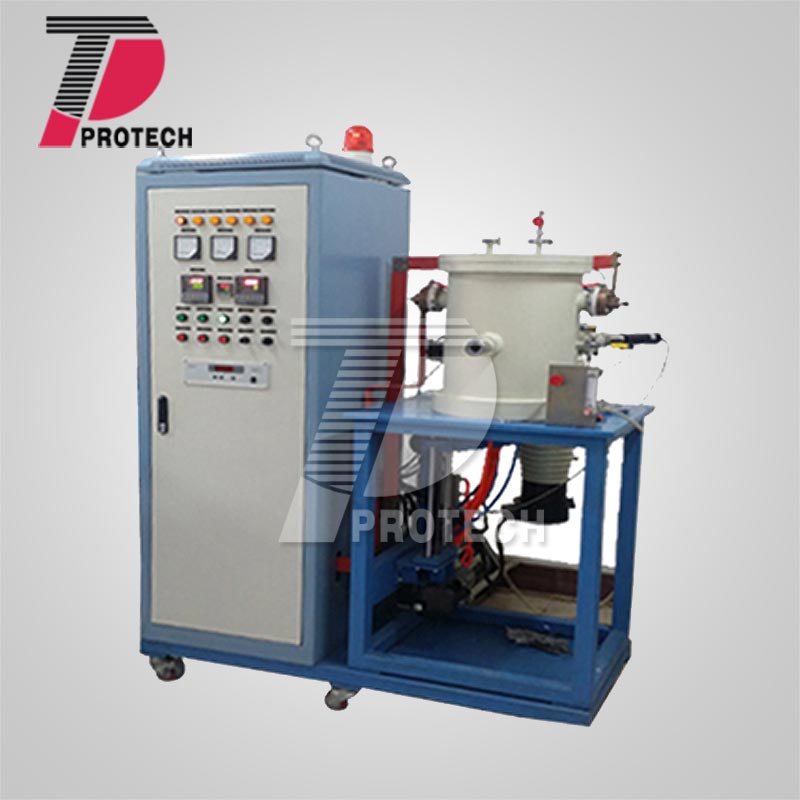
Vacuum Carbon Tube Furnace
hhqMuffle Furnace,Tube Furnace,Vacuum Furnace,Atmosphere Furnac
2.2 Adaptability Advantages of Vacuum FurnaceshhqMuffle Furnace,Tube Furnace,Vacuum Furnace,Atmosphere Furnac
Vacuum furnaces form a low-pressure environment by evacuating, which can effectively remove oxidizing gases such as oxygen and nitrogen in the furnace, fundamentally preventing oxidation and gas infiltration of niobium alloys during annealing. Compared with ordinary resistance furnaces and salt bath furnaces, vacuum furnaces adopt radiation heating, and the temperature field in the furnace is evenly distributed, with a temperature difference controllable within ±5℃, which can ensure consistent annealing effect of all parts of niobium alloy workpieces, and avoid uneven grain size and residual internal stress caused by local temperature differences. At the same time, some high-end vacuum furnaces can be equipped with an inert gas backfilling system, which can not only further improve the purity of the atmosphere in the furnace, but also strengthen heat transfer through gas circulation, shorten the annealing cycle, and improve production efficiency.hhqMuffle Furnace,Tube Furnace,Vacuum Furnace,Atmosphere Furnac
hhqMuffle Furnace,Tube Furnace,Vacuum Furnace,Atmosphere Furnac
2.3 Key Process Points for Vacuum Annealing of Niobium AlloyshhqMuffle Furnace,Tube Furnace,Vacuum Furnace,Atmosphere Furnac
The vacuum annealing process of niobium alloys needs to be accurately adjusted according to the alloy composition (such as Nb-Ti, Nb-Zr, Nb-Al, etc.), processing state and performance requirements. The core parameters include annealing temperature, holding time, vacuum degree and cooling rate.hhqMuffle Furnace,Tube Furnace,Vacuum Furnace,Atmosphere Furnac
hhqMuffle Furnace,Tube Furnace,Vacuum Furnace,Atmosphere Furnac
In terms of annealing temperature, it is usually controlled at 800-1200℃. For niobium alloy workpieces with large deformation, a higher temperature (1000-1200℃) can be used to accelerate grain recovery and recrystallization, and fully eliminate internal stress; for precision components or workpieces with low deformation, medium and low temperature (800-950℃) is suitable to avoid excessive grain growth leading to decreased material strength.hhqMuffle Furnace,Tube Furnace,Vacuum Furnace,Atmosphere Furnac
hhqMuffle Furnace,Tube Furnace,Vacuum Furnace,Atmosphere Furnac
The holding time needs to be determined according to the workpiece thickness, furnace load and temperature, generally 1-4 hours. For workpieces with large thickness and dense furnace loading, the holding time should be appropriately extended to ensure that the internal temperature of the workpiece reaches the set value and completes grain refinement and internal stress release; for thin workpieces, the holding time can be shortened to reduce energy consumption and production cycle.hhqMuffle Furnace,Tube Furnace,Vacuum Furnace,Atmosphere Furnac
hhqMuffle Furnace,Tube Furnace,Vacuum Furnace,Atmosphere Furnac
Vacuum degree is a key indicator for niobium alloy annealing, which needs to be controlled at 1×10⁻³-1×10⁻⁵ Pa. The higher the vacuum degree, the fewer gas impurities in the furnace, which can effectively avoid oxygen and nitrogen infiltration of niobium alloys, and ensure the surface quality and mechanical properties of the material.hhqMuffle Furnace,Tube Furnace,Vacuum Furnace,Atmosphere Furnac
hhqMuffle Furnace,Tube Furnace,Vacuum Furnace,Atmosphere Furnac
The cooling rate needs to be adjusted according to the performance requirements of the workpiece. Usually, furnace cooling or slow cooling is adopted, and the cooling rate is controlled at 5-20℃/min. Slow cooling can further eliminate internal stress and improve material plasticity; if there are specific requirements for material strength, the cooling rate can be appropriately increased, but new internal stress caused by too fast cooling should be avoided.
hhqMuffle Furnace,Tube Furnace,Vacuum Furnace,Atmosphere Furnac
3. Vacuum Annealing Process Parameters for Tantalum Sheets/Tungsten RodshhqMuffle Furnace,Tube Furnace,Vacuum Furnace,Atmosphere Furnac
3.1 Vacuum Annealing Process of Tantalum SheetshhqMuffle Furnace,Tube Furnace,Vacuum Furnace,Atmosphere Furnac
Tantalum sheets have excellent ductility, conductivity and corrosion resistance, and are widely used in electronic components, chemical anti-corrosion equipment and other fields. Their annealing process needs to take into account both surface quality and plasticity improvement.hhqMuffle Furnace,Tube Furnace,Vacuum Furnace,Atmosphere Furnac
hhqMuffle Furnace,Tube Furnace,Vacuum Furnace,Atmosphere Furnac
Core process parameters: vacuum degree ≥1×10⁻⁴ Pa, annealing temperature 900-1100℃, holding time 1.5-3 hours, cooling method is furnace cooling, cooling rate 8-15℃/min. For tantalum sheets used in precision electronic components, the vacuum degree can be appropriately increased to 1×10⁻⁵ Pa, and the holding time can be shortened to 1-2 hours to avoid excessive grain growth affecting dimensional accuracy; for tantalum sheets requiring subsequent deep drawing processing, the annealing temperature can be increased to 1050-1100℃, and the holding time can be extended to 2.5-3 hours to fully improve plasticity.hhqMuffle Furnace,Tube Furnace,Vacuum Furnace,Atmosphere Furnac
hhqMuffle Furnace,Tube Furnace,Vacuum Furnace,Atmosphere Furnac
Precautions: Tantalum sheets must be thoroughly cleaned of surface oil and impurities before annealing to avoid surface defects caused by volatilization of impurities during annealing; they should be placed reasonably during furnace loading to avoid adhesion between tantalum sheets and ensure uniform heating.
hhqMuffle Furnace,Tube Furnace,Vacuum Furnace,Atmosphere Furnac
3.2 Vacuum Annealing Process of Tungsten RodshhqMuffle Furnace,Tube Furnace,Vacuum Furnace,Atmosphere Furnac
Tungsten rods have a high melting point (3410℃) and high hardness, mainly used in filaments, electrodes, high-temperature structural parts and other fields. Their annealing core is to eliminate work hardening, improve toughness, and avoid brittle fracture during subsequent processing.hhqMuffle Furnace,Tube Furnace,Vacuum Furnace,Atmosphere Furnac
hhqMuffle Furnace,Tube Furnace,Vacuum Furnace,Atmosphere Furnac
Core process parameters: vacuum degree ≥5×10⁻⁴ Pa, annealing temperature 1200-1400℃, holding time 2-4 hours, cooling method is stepwise cooling, first furnace cooling to 800℃, then cooling to room temperature at a rate of 10-25℃/min. Tungsten rods have a high melting point, so high-temperature annealing is required to effectively activate grain recovery and recrystallization; stepwise cooling can avoid internal stress caused by excessive temperature difference and inhibit the precipitation of brittle phases.hhqMuffle Furnace,Tube Furnace,Vacuum Furnace,Atmosphere Furnac
hhqMuffle Furnace,Tube Furnace,Vacuum Furnace,Atmosphere Furnac
Precautions: The heating rate should be controlled during the annealing of tungsten rods to avoid workpiece deformation caused by too fast heating. The heating rate is recommended to be controlled at 30-50℃/min; for tungsten rods with a large diameter (>10mm), the holding time can be appropriately extended to 3-4 hours to ensure uniform internal structure transformation.
hhqMuffle Furnace,Tube Furnace,Vacuum Furnace,Atmosphere Furnac
4. Common Problems and Solutions in Vacuum Furnace AnnealinghhqMuffle Furnace,Tube Furnace,Vacuum Furnace,Atmosphere Furnac
4.1 Surface Oxidation and DiscolorationhhqMuffle Furnace,Tube Furnace,Vacuum Furnace,Atmosphere Furnac
Causes: Insufficient vacuum degree, residual oxidizing gases in the furnace, or incomplete cleaning of the workpiece surface. Solutions: Check the airtightness of the vacuum system, replace aging seals to ensure the vacuum degree meets the process requirements; clean the workpiece surface with anhydrous ethanol, acetone and other reagents before annealing, and put it into the furnace after drying; if necessary, backfill a small amount of argon in the furnace to further isolate residual oxygen.hhqMuffle Furnace,Tube Furnace,Vacuum Furnace,Atmosphere Furnac
hhqMuffle Furnace,Tube Furnace,Vacuum Furnace,Atmosphere Furnac
4.2 Uneven Grain SizehhqMuffle Furnace,Tube Furnace,Vacuum Furnace,Atmosphere Furnac
Causes: Uneven temperature field distribution, insufficient holding time or too fast heating rate. Solutions: Regularly calibrate the temperature sensor of the vacuum furnace, adjust the position of the heating element to ensure uniform temperature in the furnace; optimize the holding time according to the workpiece state to avoid insufficient holding; control the heating rate and adopt a stepwise heating method.hhqMuffle Furnace,Tube Furnace,Vacuum Furnace,Atmosphere Furnac
hhqMuffle Furnace,Tube Furnace,Vacuum Furnace,Atmosphere Furnac
4.3 Residual Internal StresshhqMuffle Furnace,Tube Furnace,Vacuum Furnace,Atmosphere Furnac
Causes: Too fast cooling rate and low annealing temperature. Solutions: Optimize the cooling process, adopt slow cooling or stepwise cooling; appropriately increase the annealing temperature and extend the holding time to ensure full release of internal stress.hhqMuffle Furnace,Tube Furnace,Vacuum Furnace,Atmosphere Furnac
hhqMuffle Furnace,Tube Furnace,Vacuum Furnace,Atmosphere Furnac
5. ConclusionhhqMuffle Furnace,Tube Furnace,Vacuum Furnace,Atmosphere Furnac
Vacuum furnaces play an irreplaceable role in the annealing of refractory metals such as niobium alloys, tantalum sheets, and tungsten rods. The precise control of their process parameters directly determines the mechanical properties, surface quality, and dimensional stability of materials. In the actual production process, it is necessary to targetedly optimize parameters such as annealing temperature, holding time, vacuum degree, and cooling rate in combination with material composition, processing state, and finished product performance requirements. At the same time, do a good job in furnace maintenance and workpiece pretreatment to effectively improve the annealing effect and ensure product quality. With the continuous improvement of performance requirements for refractory metal materials in the high-end manufacturing field, vacuum furnace technology will further develop in the direction of high precision, high efficiency, and intelligence, providing more reliable support for the processing and application of refractory metal materials.hhqMuffle Furnace,Tube Furnace,Vacuum Furnace,Atmosphere Furnac
hhqMuffle Furnace,Tube Furnace,Vacuum Furnace,Atmosphere Furnac
Zhengzhou Protech Technology Co.,LTD is a professional manufacturer specializing in tube furnaces, muffle furnaces, atmosphere furnaces, and vacuum furnaces. We are committed to providing targeted solutions to meet your diverse heating equipment needs.hhqMuffle Furnace,Tube Furnace,Vacuum Furnace,Atmosphere Furnac
hhqMuffle Furnace,Tube Furnace,Vacuum Furnace,Atmosphere Furnac
For customized heating solutions tailored to your specific requirements, feel free to get in touch with us:
hhqMuffle Furnace,Tube Furnace,Vacuum Furnace,Atmosphere Furnac
WhatsApp: +86 17719806024hhqMuffle Furnace,Tube Furnace,Vacuum Furnace,Atmosphere Furnac
Email: info@lab-furnace.com