Zhengzhou Protech
Home > News

Product

Contact Us

Leave Message

Contact Us

All products are customizable, leave message immediately, we will reply as soon as possible.

Name

Tel/WhatsApp

E-mail *

Country *

Raw Materia

Message *

Verification code *

I can't see clearly, refresh

Box Furnace Processing for NdFeB Magnets: Sintering & Tempering Analysis

1. IntroductionuCLMuffle Furnace,Tube Furnace,Vacuum Furnace,Atmosphere Furnac
uCLMuffle Furnace,Tube Furnace,Vacuum Furnace,Atmosphere Furnac
Neodymium-iron-boron (NdFeB) magnets are the most powerful permanent magnets in commercial production, widely deployed in electric vehicle motors, wind turbine generators, precision sensors, and consumer electronics. Box furnaces are the primary industrial equipment for their sintering and tempering processes, as precise control over temperature, holding time, and protective atmosphere directly determines the final magnetic properties, mechanical integrity, and long-term stability of the magnets. This article provides a detailed analysis of the key process parameters in box furnace treatment and their quantitative impact on NdFeB magnet performance, offering actionable insights for process optimization.uCLMuffle Furnace,Tube Furnace,Vacuum Furnace,Atmosphere Furnac
uCLMuffle Furnace,Tube Furnace,Vacuum Furnace,Atmosphere Furnac
2. Sintering Process in Box FurnacesuCLMuffle Furnace,Tube Furnace,Vacuum Furnace,Atmosphere Furnac
uCLMuffle Furnace,Tube Furnace,Vacuum Furnace,Atmosphere Furnac
Sintering is the most critical stage in NdFeB production, responsible for densifying green compacts and forming the primary magnetic phase (Nd₂Fe₁₄B).uCLMuffle Furnace,Tube Furnace,Vacuum Furnace,Atmosphere Furnac
uCLMuffle Furnace,Tube Furnace,Vacuum Furnace,Atmosphere Furnac
Temperature Window: The optimal range is typically 1050–1100°C. Temperatures below this range result in insufficient densification, residual porosity, and weak magnetic flux density. Excessively high temperatures trigger abnormal grain growth, which severely reduces coercivity by disrupting the domain wall pinning effect.uCLMuffle Furnace,Tube Furnace,Vacuum Furnace,Atmosphere Furnac
Holding Time: 2–4 hours is standard. Shorter times prevent complete phase transformation and leave internal pores, while longer holding times beyond 4 hours lead to grain coarsening and a subsequent drop in coercivity.uCLMuffle Furnace,Tube Furnace,Vacuum Furnace,Atmosphere Furnac
Atmosphere: High-purity argon (with a vacuum level ≤10⁻³ Pa) is required to protect the Nd-rich grain boundary phases from oxidation. Even trace amounts of oxygen can form non-magnetic oxides, irreversibly degrading coercivity.uCLMuffle Furnace,Tube Furnace,Vacuum Furnace,Atmosphere Furnac
Cooling Rate: Controlled cooling at 5–10°C/min is recommended to minimize thermal stress and avoid phase segregation, which could lead to cracking or uneven magnetic properties across the magnet.
uCLMuffle Furnace,Tube Furnace,Vacuum Furnace,Atmosphere Furnac
 
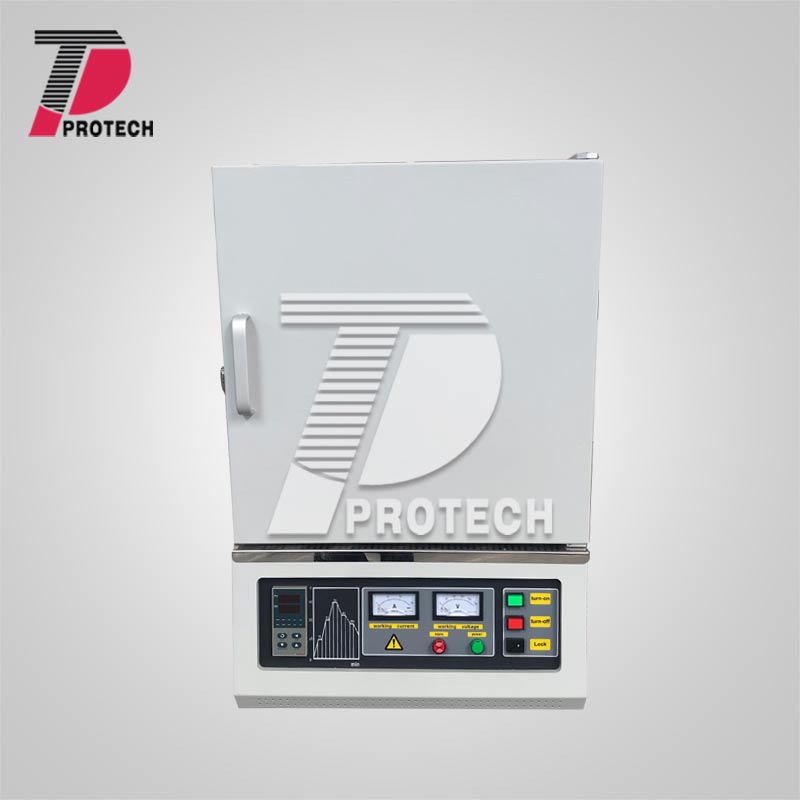
box furnace
uCLMuffle Furnace,Tube Furnace,Vacuum Furnace,Atmosphere Furnac
3. Tempering Process in Box FurnacesuCLMuffle Furnace,Tube Furnace,Vacuum Furnace,Atmosphere Furnac
uCLMuffle Furnace,Tube Furnace,Vacuum Furnace,Atmosphere Furnac
Tempering (post-sintering heat treatment) is a two-stage process performed at 450–600°C for 1–3 hours total, designed to optimize the grain boundary microstructure.uCLMuffle Furnace,Tube Furnace,Vacuum Furnace,Atmosphere Furnac
First Stage (480–520°C): This step refines the Nd-rich grain boundary phase, relieves internal stress from sintering, and significantly improves coercivity by enhancing domain wall pinning.uCLMuffle Furnace,Tube Furnace,Vacuum Furnace,Atmosphere Furnac
Second Stage (550–600°C): This stage further optimizes the distribution and composition of the grain boundary phases, boosting remanence and thermal stability without compromising coercivity.uCLMuffle Furnace,Tube Furnace,Vacuum Furnace,Atmosphere Furnac
Atmosphere: The same high-purity argon or vacuum environment used in sintering must be maintained to prevent oxidation of the Nd-rich phases during high-temperature holding.
uCLMuffle Furnace,Tube Furnace,Vacuum Furnace,Atmosphere Furnac
4. Performance Impact AnalysisuCLMuffle Furnace,Tube Furnace,Vacuum Furnace,Atmosphere Furnac
uCLMuffle Furnace,Tube Furnace,Vacuum Furnace,Atmosphere Furnac
Sintering Temperature Increase:uCLMuffle Furnace,Tube Furnace,Vacuum Furnace,Atmosphere Furnac
Higher sintering temperatures initially improve densification and remanence, but once grain growth begins, coercivity decreases sharply. Mechanically, elevated temperatures increase material brittleness and raise the risk of thermal cracking due to uneven cooling.uCLMuffle Furnace,Tube Furnace,Vacuum Furnace,Atmosphere Furnac
uCLMuffle Furnace,Tube Furnace,Vacuum Furnace,Atmosphere Furnac
Sintering Time Increase:uCLMuffle Furnace,Tube Furnace,Vacuum Furnace,Atmosphere Furnac
Longer holding times enhance densification and magnetic performance, with coercivity peaking at an optimal duration (typically 3 hours) before declining due to excessive grain growth. Mechanically, extended sintering reduces internal porosity and improves overall material strength and durability.uCLMuffle Furnace,Tube Furnace,Vacuum Furnace,Atmosphere Furnac
uCLMuffle Furnace,Tube Furnace,Vacuum Furnace,Atmosphere Furnac
Tempering Temperature Increase:uCLMuffle Furnace,Tube Furnace,Vacuum Furnace,Atmosphere Furnac
Coercivity reaches its maximum within the 500–550°C range, then decreases as temperatures rise further due to grain boundary thickening. Mechanically, higher tempering temperatures lead to a slight improvement in material ductility, reducing the risk of chipping or fracture during machining.uCLMuffle Furnace,Tube Furnace,Vacuum Furnace,Atmosphere Furnac
uCLMuffle Furnace,Tube Furnace,Vacuum Furnace,Atmosphere Furnac
Oxidation (Poor Atmosphere Control):uCLMuffle Furnace,Tube Furnace,Vacuum Furnace,Atmosphere Furnac
Oxidation causes severe loss of coercivity and a sharp drop in magnetic flux density, directly degrading magnetic performance. Mechanically, it results in brittle fracture and significant surface degradation, making the magnet unsuitable for high-stress applications.
uCLMuffle Furnace,Tube Furnace,Vacuum Furnace,Atmosphere Furnac
5. Best Practices for Box Furnace OperationuCLMuffle Furnace,Tube Furnace,Vacuum Furnace,Atmosphere Furnac
uCLMuffle Furnace,Tube Furnace,Vacuum Furnace,Atmosphere Furnac
Precisely calibrate furnace temperature uniformity (±5°C) to ensure consistent grain growth and magnetic properties across the entire charge.uCLMuffle Furnace,Tube Furnace,Vacuum Furnace,Atmosphere Furnac
Maintain strict vacuum/argon purity levels to avoid irreversible oxidation of Nd-rich phases, which is the leading cause of performance failure.uCLMuffle Furnace,Tube Furnace,Vacuum Furnace,Atmosphere Furnac
Implement a two-stage tempering process to balance coercivity and remanence, achieving the optimal magnetic performance for specific applications.uCLMuffle Furnace,Tube Furnace,Vacuum Furnace,Atmosphere Furnac
Monitor and control cooling rates to prevent thermal cracking and phase segregation, ensuring the structural integrity of the final product.uCLMuffle Furnace,Tube Furnace,Vacuum Furnace,Atmosphere Furnac
Conduct regular quality checks, including magnetic property testing and microstructure analysis, to validate process consistency and identify areas for improvement.
uCLMuffle Furnace,Tube Furnace,Vacuum Furnace,Atmosphere Furnac
6. ConclusionuCLMuffle Furnace,Tube Furnace,Vacuum Furnace,Atmosphere Furnac
Box furnace sintering and tempering are foundational processes that directly determine the performance and reliability of NdFeB magnets. By optimizing temperature, holding time, and atmosphere parameters, manufacturers can significantly enhance coercivity, remanence, and thermal stability. This control enables the production of high-performance NdFeB magnets that meet the demanding requirements of modern industries, including electric vehicles, renewable energy systems, and precision electronics.uCLMuffle Furnace,Tube Furnace,Vacuum Furnace,Atmosphere Furnac
uCLMuffle Furnace,Tube Furnace,Vacuum Furnace,Atmosphere Furnac
Zhengzhou Protech Technology Co.,LTD is a professional manufacturer specializing in tube furnaces, muffle furnaces, atmosphere furnaces, and vacuum furnaces. We are committed to providing targeted solutions to meet your diverse heating equipment needs.uCLMuffle Furnace,Tube Furnace,Vacuum Furnace,Atmosphere Furnac
For customized heating solutions tailored to your specific requirements, feel free to get in touch with us:uCLMuffle Furnace,Tube Furnace,Vacuum Furnace,Atmosphere Furnac
WhatsApp: +86 17719806024uCLMuffle Furnace,Tube Furnace,Vacuum Furnace,Atmosphere Furnac
Email: info@lab-furnace.com