Zhengzhou Protech
Home > News

Product

Contact Us

Leave Message

Contact Us

All products are customizable, leave message immediately, we will reply as soon as possible.

Name

Tel/WhatsApp

E-mail *

Country *

Raw Materia

Message *

Verification code *

I can't see clearly, refresh

CVD vs PECVD: Key Parameters for Semiconductor & PV Thin Film Deposition

JBkMuffle Furnace,Tube Furnace,Vacuum Furnace,Atmosphere Furnac
IntroductionJBkMuffle Furnace,Tube Furnace,Vacuum Furnace,Atmosphere Furnac
JBkMuffle Furnace,Tube Furnace,Vacuum Furnace,Atmosphere Furnac
Chemical Vapor Deposition (CVD) and Plasma Enhanced Chemical Vapor Deposition (PECVD) are indispensable core technologies for thin film fabrication in the modern semiconductor and photovoltaic (PV) industries. As the demand for high-performance materials continues to surge, selecting the appropriate equipment becomes a critical decision that directly impacts final film quality, process stability, and overall production efficiency.JBkMuffle Furnace,Tube Furnace,Vacuum Furnace,Atmosphere Furnac
JBkMuffle Furnace,Tube Furnace,Vacuum Furnace,Atmosphere Furnac
This comprehensive guide aims to provide in-depth insights into the fundamental differences between CVD and PECVD systems. By systematically analyzing core operating parameters, performance metrics, and application-specific scenarios, this article assists professional engineers, R&D managers, and procurement specialists in making informed, technically sound decisions when evaluating CVD/PECVD equipment for their specific projects.
JBkMuffle Furnace,Tube Furnace,Vacuum Furnace,Atmosphere Furnac
 
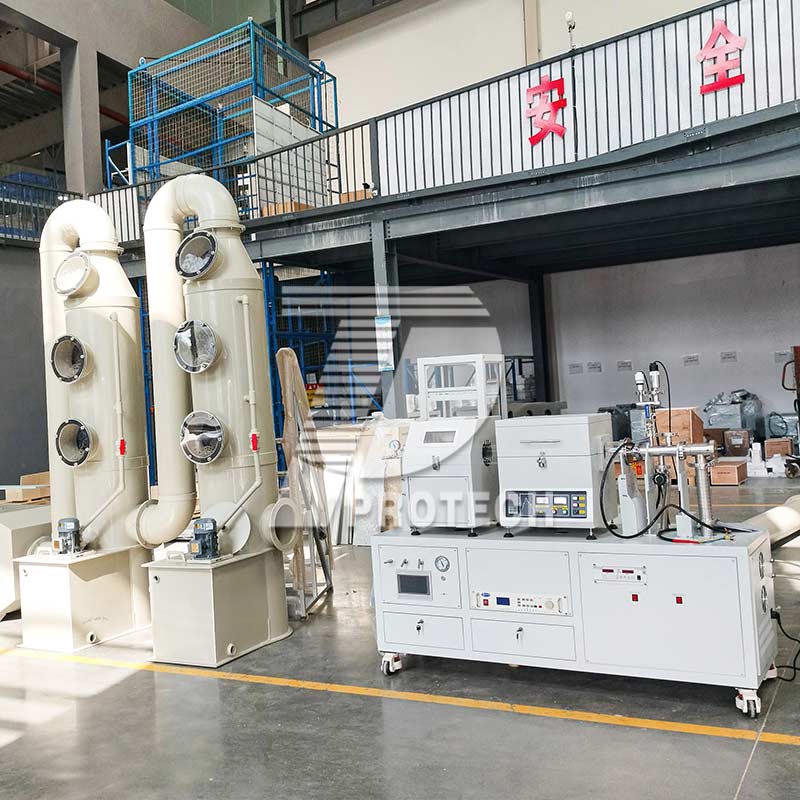
pecvd furnace
JBkMuffle Furnace,Tube Furnace,Vacuum Furnace,Atmosphere Furnac
1. Fundamental Working PrinciplesJBkMuffle Furnace,Tube Furnace,Vacuum Furnace,Atmosphere Furnac
JBkMuffle Furnace,Tube Furnace,Vacuum Furnace,Atmosphere Furnac
Before delving into parameter comparison, it is essential to grasp the core working mechanisms that define each technology.JBkMuffle Furnace,Tube Furnace,Vacuum Furnace,Atmosphere Furnac
JBkMuffle Furnace,Tube Furnace,Vacuum Furnace,Atmosphere Furnac
CVD (Thermal CVD): At its heart, CVD is a high-temperature chemical reaction process. It relies on external thermal energy (typically from resistive heating elements or inductive coils) to provide the necessary activation energy for the precursor gases. When these gases react under high heat, they decompose, and a thin layer of solid material is deposited onto a heated substrate. The process is fundamentally driven by temperature, operating at a relatively high spectrum, usually ranging from 600°C to 1200°C.JBkMuffle Furnace,Tube Furnace,Vacuum Furnace,Atmosphere Furnac
JBkMuffle Furnace,Tube Furnace,Vacuum Furnace,Atmosphere Furnac
PECVD (Plasma Enhanced CVD): Differing fundamentally from thermal CVD, PECVD introduces an external energy source in the form of plasma. Using Radio Frequency (RF) or microwave power, an electrical field is generated within a vacuum chamber to ionize the process gases into a plasma state. This activated plasma significantly lowers the reaction activation energy barrier, enabling the film deposition to occur at a much lower temperature range, often between 200°C and 500°C. The lower thermal budget makes PECVD ideal for temperature-sensitive substrates.
JBkMuffle Furnace,Tube Furnace,Vacuum Furnace,Atmosphere Furnac
2. Core Selection Parameters: A Detailed BreakdownJBkMuffle Furnace,Tube Furnace,Vacuum Furnace,Atmosphere Furnac
JBkMuffle Furnace,Tube Furnace,Vacuum Furnace,Atmosphere Furnac
The following sections break down the key decision-making parameters into detailed textual explanations, highlighting the nuanced differences between CVD and PECVD systems.JBkMuffle Furnace,Tube Furnace,Vacuum Furnace,Atmosphere Furnac
JBkMuffle Furnace,Tube Furnace,Vacuum Furnace,Atmosphere Furnac
2.1 Deposition Temperature & Process PressureJBkMuffle Furnace,Tube Furnace,Vacuum Furnace,Atmosphere Furnac
The most intuitive difference lies in the thermal budget and pressure requirements.JBkMuffle Furnace,Tube Furnace,Vacuum Furnace,Atmosphere Furnac
JBkMuffle Furnace,Tube Furnace,Vacuum Furnace,Atmosphere Furnac
CVD: Operates at high temperatures (600°C - 1200°C). While this ensures high chemical activity and reaction efficiency, it imposes strict limitations on substrate materials. For semiconductor applications, high-temperature CVD may restrict its use in back-end processes where delicate structures are present. In terms of pressure, CVD can operate at atmospheric pressure (APCVD) or low vacuum (LPCVD), with LPCVD being the more common choice for its superior uniformity.JBkMuffle Furnace,Tube Furnace,Vacuum Furnace,Atmosphere Furnac
JBkMuffle Furnace,Tube Furnace,Vacuum Furnace,Atmosphere Furnac
PECVD: Operates at low temperatures (200°C - 500°C), making it compatible with a wide range of substrates, including metals, polymers, and temperature-sensitive semiconductors. Critically, PECVD requires a high vacuum environment (typically in the range of 10⁻¹ to 10⁻³ Pa). The presence of plasma in a high vacuum environment enables excellent uniformity and step coverage, which is indispensable for the complex, high-aspect-ratio structures found in advanced semiconductor manufacturing.JBkMuffle Furnace,Tube Furnace,Vacuum Furnace,Atmosphere Furnac
JBkMuffle Furnace,Tube Furnace,Vacuum Furnace,Atmosphere Furnac
2.2 Energy Source & Film UniformityJBkMuffle Furnace,Tube Furnace,Vacuum Furnace,Atmosphere Furnac
The energy source dictates the precision and consistency of the deposited film.JBkMuffle Furnace,Tube Furnace,Vacuum Furnace,Atmosphere Furnac
JBkMuffle Furnace,Tube Furnace,Vacuum Furnace,Atmosphere Furnac
CVD: The energy source is purely thermal, derived from electric heating elements. The temperature distribution within the furnace chamber is key to uniformity. While modern CVD systems offer good uniformity (often within ±5%), it can be challenging to achieve absolute consistency across large batch sizes or intricate geometries.JBkMuffle Furnace,Tube Furnace,Vacuum Furnace,Atmosphere Furnac
JBkMuffle Furnace,Tube Furnace,Vacuum Furnace,Atmosphere Furnac
PECVD: The energy source is RF or microwave-generated plasma. The plasma parameters (density, ion energy, and flux) can be precisely controlled independently of the substrate temperature. This allows for exceptional control over film properties. PECVD systems consistently deliver excellent uniformity, often within ±2-3%, and superior step coverage, meaning the film can conformally coat deep trenches and vias without breaking or thinning.JBkMuffle Furnace,Tube Furnace,Vacuum Furnace,Atmosphere Furnac
JBkMuffle Furnace,Tube Furnace,Vacuum Furnace,Atmosphere Furnac
2.3 Deposition Rate & Material CompatibilityJBkMuffle Furnace,Tube Furnace,Vacuum Furnace,Atmosphere Furnac
These parameters determine the production speed and the range of applicable materials.JBkMuffle Furnace,Tube Furnace,Vacuum Furnace,Atmosphere Furnac
JBkMuffle Furnace,Tube Furnace,Vacuum Furnace,Atmosphere Furnac
CVD: Generally offers a moderate to high deposition rate. This is advantageous for applications where thick films are required, such as certain layers in photovoltaic (PV) panel manufacturing or epitaxial growth. CVD is compatible with a very wide range of materials, including metals, semiconductors, and dielectrics, making it a versatile workhorse in the industry.JBkMuffle Furnace,Tube Furnace,Vacuum Furnace,Atmosphere Furnac
JBkMuffle Furnace,Tube Furnace,Vacuum Furnace,Atmosphere Furnac
PECVD: Typically has a lower deposition rate compared to high-temperature CVD. However, this is often a worthwhile trade-off for the benefits of low-temperature processing and superior film quality. PECVD is particularly specialized for depositing dielectric films such as Silicon Dioxide (SiO₂), Silicon Nitride (SiNx), and amorphous silicon (a-Si), which are staple materials in semiconductor device fabrication and thin-film solar cell production.
JBkMuffle Furnace,Tube Furnace,Vacuum Furnace,Atmosphere Furnac
3. Application-Specific Selection GuidelinesJBkMuffle Furnace,Tube Furnace,Vacuum Furnace,Atmosphere Furnac
JBkMuffle Furnace,Tube Furnace,Vacuum Furnace,Atmosphere Furnac
To provide concrete guidance, here are tailored recommendations for the semiconductor and PV industries.JBkMuffle Furnace,Tube Furnace,Vacuum Furnace,Atmosphere Furnac
JBkMuffle Furnace,Tube Furnace,Vacuum Furnace,Atmosphere Furnac
3.1 For the Semiconductor IndustryJBkMuffle Furnace,Tube Furnace,Vacuum Furnace,Atmosphere Furnac
Choose PECVD: For front-end processes like gate dielectrics, passivation layers, and contact engineering. Its low temperature prevents damage to delicate pre-fabricated structures, and its excellent uniformity ensures device reliability.JBkMuffle Furnace,Tube Furnace,Vacuum Furnace,Atmosphere Furnac
Consider LPCVD: For back-end processes requiring high-purity layers, such as polysilicon gates or doped layers. LPCVD offers good uniformity and throughput for batch processing.JBkMuffle Furnace,Tube Furnace,Vacuum Furnace,Atmosphere Furnac
JBkMuffle Furnace,Tube Furnace,Vacuum Furnace,Atmosphere Furnac
3.2 For the Photovoltaic (PV) IndustryJBkMuffle Furnace,Tube Furnace,Vacuum Furnace,Atmosphere Furnac
Opt for PECVD: In the production of thin-film solar cells (e.g., a-Si:H cells), PECVD is the standard choice for depositing the photoactive layers due to its low temperature and ability to incorporate hydrogen, which passivates defects.JBkMuffle Furnace,Tube Furnace,Vacuum Furnace,Atmosphere Furnac
Use APCVD or PECVD: For anti-reflective coatings (ARC) on traditional crystalline silicon wafers. Both technologies can deposit silicon nitride (SiNx) layers efficiently to enhance light absorption and improve cell efficiency.
JBkMuffle Furnace,Tube Furnace,Vacuum Furnace,Atmosphere Furnac
4. ConclusionJBkMuffle Furnace,Tube Furnace,Vacuum Furnace,Atmosphere Furnac
JBkMuffle Furnace,Tube Furnace,Vacuum Furnace,Atmosphere Furnac
In summary, selecting between CVD and PECVD equipment is not a simple matter of choosing one over the other, but rather a strategic decision based on a holistic evaluation of project requirements. PECVD stands out for its low-temperature processing, exceptional uniformity, and precise control over film properties, making it the first choice for high-end semiconductor applications and temperature-sensitive processes. Conversely, CVD excels in its high deposition rate, wide material compatibility, and ability to handle thick-film applications, particularly in the photovoltaic and industrial heat treatment sectors.JBkMuffle Furnace,Tube Furnace,Vacuum Furnace,Atmosphere Furnac
JBkMuffle Furnace,Tube Furnace,Vacuum Furnace,Atmosphere Furnac
By thoroughly understanding the core parameters outlined in this guide, manufacturers can ensure that their chosen CVD or PECVD system is perfectly aligned with their production goals, ultimately leading to higher yields, better product quality, and long-term operational success.JBkMuffle Furnace,Tube Furnace,Vacuum Furnace,Atmosphere Furnac
JBkMuffle Furnace,Tube Furnace,Vacuum Furnace,Atmosphere Furnac
Zhengzhou Protech Technology Co.,LTD is a professional manufacturer specializing in tube furnaces, muffle furnaces, atmosphere furnaces, and vacuum furnaces. We are committed to providing targeted solutions to meet your diverse heating equipment needs.JBkMuffle Furnace,Tube Furnace,Vacuum Furnace,Atmosphere Furnac
For customized heating solutions tailored to your specific requirements, feel free to get in touch with us:JBkMuffle Furnace,Tube Furnace,Vacuum Furnace,Atmosphere Furnac
WhatsApp: +86 17719806024JBkMuffle Furnace,Tube Furnace,Vacuum Furnace,Atmosphere Furnac
Email: info@lab-furnace.com