Zhengzhou Protech
Home > News

Product

Contact Us

Leave Message

Contact Us

All products are customizable, leave message immediately, we will reply as soon as possible.

Name

Tel/WhatsApp

E-mail *

Country *

Raw Materia

Message *

Verification code *

I can't see clearly, refresh

Lithium Battery Materials: High-Temperature Testing & Furnace Criteria

1. IntroductionlhOMuffle Furnace,Tube Furnace,Vacuum Furnace,Atmosphere Furnac
With the rapid development of new energy vehicles and energy storage stations, the safety, stability, and cycle life of lithium batteries have become industry core focuses. The high-temperature performance of lithium battery materials (cathode, anode, electrolyte, separator, etc.) directly determines battery overall safety and reliability, making high-temperature testing a key link in R&D and quality control. As core equipment for such testing, specialized laboratory electric furnaces affect test accuracy and repeatability via performance stability, temperature control precision, and atmosphere regulation capabilities. This paper sorts out their core performance requirements, proposes scientific selection criteria, and provides technical references for lithium battery industry practitioners.lhOMuffle Furnace,Tube Furnace,Vacuum Furnace,Atmosphere Furnac
lhOMuffle Furnace,Tube Furnace,Vacuum Furnace,Atmosphere Furnac
2. Core Performance Requirements of Laboratory Electric Furnaces
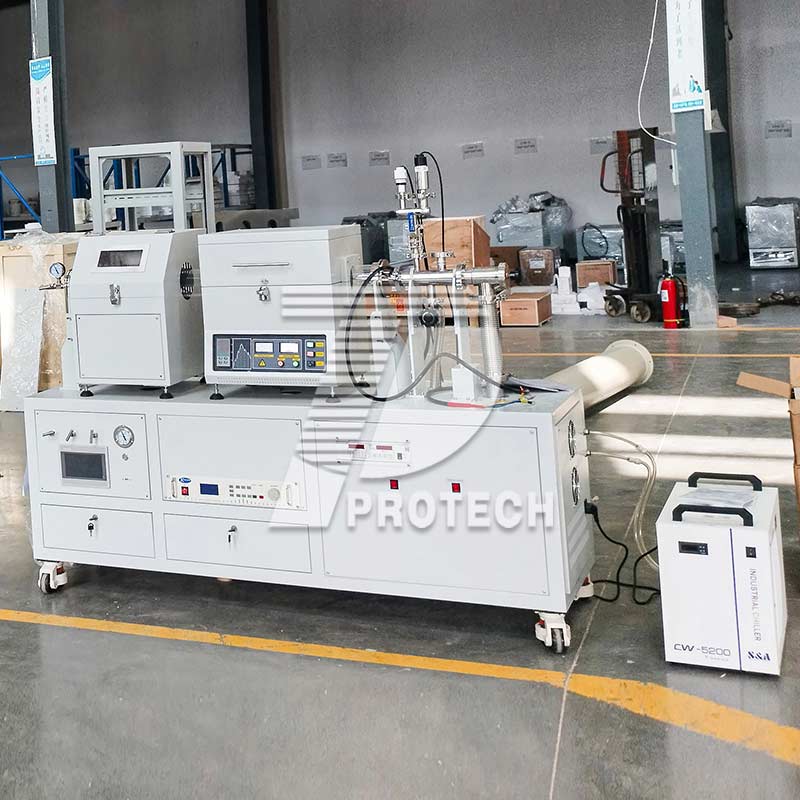
pecvd furnace
lhOMuffle Furnace,Tube Furnace,Vacuum Furnace,Atmosphere Furnac
2.1 Precise Temperature Control CapabilitylhOMuffle Furnace,Tube Furnace,Vacuum Furnace,Atmosphere Furnac
lhOMuffle Furnace,Tube Furnace,Vacuum Furnace,Atmosphere Furnac
Temperature is the core variable in lithium battery material high-temperature testing, with different materials requiring specific temperature ranges and precision. Specialized laboratory electric furnaces must have a wide temperature adjustment range and high control precision: they need high-performance heating elements (e.g., molybdenum disilicide rods) with adjustable heating rates (0.5-20℃/min), and high-precision PID closed-loop temperature control systems combined with multi-point sensors to monitor furnace temperature distribution. The effective heating zone temperature uniformity deviation should be ≤±2℃, and the constant temperature fluctuation range should not exceed ±0.5℃ to ensure long-term test stability.lhOMuffle Furnace,Tube Furnace,Vacuum Furnace,Atmosphere Furnac
lhOMuffle Furnace,Tube Furnace,Vacuum Furnace,Atmosphere Furnac
2.2 Flexible Atmosphere Regulation FunctionlhOMuffle Furnace,Tube Furnace,Vacuum Furnace,Atmosphere Furnac
lhOMuffle Furnace,Tube Furnace,Vacuum Furnace,Atmosphere Furnac
Lithium battery materials are prone to reacting with oxygen and moisture at high temperatures, so most tests require inert gas protection (argon, nitrogen) or vacuum environments. Specialized electric furnaces need complete atmosphere regulation: reliable gas inlet/outlet systems to control inert gas flow (0-5L/min) and maintain oxygen content below 10ppm, vacuum pumping capability (10⁻²-10⁻³Pa), and convenient atmosphere switching (air-inert gas-vacuum) with stable furnace pressure. Excellent furnace sealing (high-temperature resistant materials like graphite rings) is essential to prevent air infiltration and gas leakage.lhOMuffle Furnace,Tube Furnace,Vacuum Furnace,Atmosphere Furnac
lhOMuffle Furnace,Tube Furnace,Vacuum Furnace,Atmosphere Furnac
2.3 Reliable Safety Protection PerformancelhOMuffle Furnace,Tube Furnace,Vacuum Furnace,Atmosphere Furnac
lhOMuffle Furnace,Tube Furnace,Vacuum Furnace,Atmosphere Furnac
Lithium battery materials may undergo thermal decomposition, gas production, or combustion during high-temperature testing, requiring comprehensive safety protection for electric furnaces. Key requirements include: over-temperature alarm and power-off protection (triggered when temperature exceeds set upper limit +5℃), pressure monitoring and relief devices to prevent furnace deformation from gas production, and gas leakage detection for real-time monitoring of inert or flammable gases. The furnace shell should use high-temperature resistant and heat-insulating materials, keeping surface temperature below 50℃ to avoid operator scalding.lhOMuffle Furnace,Tube Furnace,Vacuum Furnace,Atmosphere Furnac
lhOMuffle Furnace,Tube Furnace,Vacuum Furnace,Atmosphere Furnac
2.4 Excellent Structural Stability and CompatibilitylhOMuffle Furnace,Tube Furnace,Vacuum Furnace,Atmosphere Furnac
lhOMuffle Furnace,Tube Furnace,Vacuum Furnace,Atmosphere Furnac
Specialized electric furnaces need stable structural performance for long-term, high-frequency testing: furnace chambers made of high-density ceramic fiber or alumina with good thermal insulation and high-temperature stability, and hinge-structured furnace doors for easy opening and tight sealing. They also require good compatibility with various test tools (crucibles, sample holders) and appropriate furnace size (10-50L effective volume) to ensure sample coverage in the heating zone. Additionally, data recording and export functions are necessary for tracking temperature, atmosphere, and time parameters.lhOMuffle Furnace,Tube Furnace,Vacuum Furnace,Atmosphere Furnac
lhOMuffle Furnace,Tube Furnace,Vacuum Furnace,Atmosphere Furnac
3. Selection Criteria for Specialized Laboratory Electric FurnaceslhOMuffle Furnace,Tube Furnace,Vacuum Furnace,Atmosphere Furnac
lhOMuffle Furnace,Tube Furnace,Vacuum Furnace,Atmosphere Furnac
3.1 Targeted Selection Based on Test Materials and ProjectslhOMuffle Furnace,Tube Furnace,Vacuum Furnace,Atmosphere Furnac
lhOMuffle Furnace,Tube Furnace,Vacuum Furnace,Atmosphere Furnac
Selection should match test requirements: for cathode material thermal stability testing, prioritize electric furnaces with 50-800℃ temperature range, ±1℃ control precision, and inert gas/vacuum functions; for electrolyte high-temperature decomposition testing, choose models with adjustable heating rates (0.5-5℃/min), ±0.5℃ constant temperature precision, and gas collection devices; for separator testing, focus on furnace temperature uniformity (deviation ≤±1℃) with multi-point temperature measurement; for anode material testing, select furnaces with vacuum degree ≥10⁻³Pa and oxygen content <5ppm.lhOMuffle Furnace,Tube Furnace,Vacuum Furnace,Atmosphere Furnac
lhOMuffle Furnace,Tube Furnace,Vacuum Furnace,Atmosphere Furnac
3.2 Quantitative Selection Based on Core Performance ParameterslhOMuffle Furnace,Tube Furnace,Vacuum Furnace,Atmosphere Furnac
lhOMuffle Furnace,Tube Furnace,Vacuum Furnace,Atmosphere Furnac
Quantitative evaluation of core parameters is essential: for temperature, confirm rated maximum temperature, control precision, heating rate range, and constant temperature fluctuation; for atmosphere, check inert gas flow range, vacuum level, and oxygen content control; for safety, verify over-temperature protection, pressure protection, and gas leakage detection devices; for structure and function, investigate furnace size, effective heating zone, tooling compatibility, and data functions. Prioritize energy-saving equipment with high-quality heating elements and thermal insulation materials to reduce long-term costs.lhOMuffle Furnace,Tube Furnace,Vacuum Furnace,Atmosphere Furnac
lhOMuffle Furnace,Tube Furnace,Vacuum Furnace,Atmosphere Furnac
3.3 Reliability Selection Based on Equipment Quality and ServicelhOMuffle Furnace,Tube Furnace,Vacuum Furnace,Atmosphere Furnac
lhOMuffle Furnace,Tube Furnace,Vacuum Furnace,Atmosphere Furnac
Equipment quality and after-sales service support continuous testing. Focus on: manufacturer qualifications and reputation (prioritize ISO9001-certified enterprises with new energy material testing equipment experience), core component quality (well-known brand heating elements, temperature controllers, etc.), and after-sales service (installation, training, maintenance, fast fault response). Ensure equipment complies with national safety standards (e.g., GB/T 10066.1-2021) and industry test requirements.lhOMuffle Furnace,Tube Furnace,Vacuum Furnace,Atmosphere Furnac
lhOMuffle Furnace,Tube Furnace,Vacuum Furnace,Atmosphere Furnac
4. Engineering Application CaselhOMuffle Furnace,Tube Furnace,Vacuum Furnace,Atmosphere Furnac
lhOMuffle Furnace,Tube Furnace,Vacuum Furnace,Atmosphere Furnac
A lithium battery cathode material manufacturer conducted high-temperature stability testing of NCM811 cathode materials, requiring 50-600℃ temperature, 5℃/min heating rate, ±0.5℃ constant temperature fluctuation, argon protection (oxygen content <10ppm), and real-time data recording. A box-type atmosphere electric furnace (rated 800℃) was selected, with molybdenum disilicide heating elements, high-precision PID temperature control (±1℃ precision, ±1.5℃ uniformity), argon flow control (0-5L/min), 10⁻³Pa vacuum, graphite seals, safety protection devices, 30L effective volume, and data export functions.lhOMuffle Furnace,Tube Furnace,Vacuum Furnace,Atmosphere Furnac
lhOMuffle Furnace,Tube Furnace,Vacuum Furnace,Atmosphere Furnac
In practice, the furnace stably achieved precise temperature control, with oxygen content below 8ppm and no gas leakage or temperature fluctuation. Test results obtained NCM811 weight change curves and thermal decomposition critical points with good repeatability (deviation ≤2%), supporting material optimization. This case confirms that targeted selection based on test requirements ensures equipment matching and reliable testing.
lhOMuffle Furnace,Tube Furnace,Vacuum Furnace,Atmosphere Furnac
5. Conclusion and ProspectlhOMuffle Furnace,Tube Furnace,Vacuum Furnace,Atmosphere Furnac
lhOMuffle Furnace,Tube Furnace,Vacuum Furnace,Atmosphere Furnac
Specialized laboratory electric furnace performance is closely related to high-temperature test accuracy, requiring precise temperature control, flexible atmosphere regulation, reliable safety protection, and structural stability. Selection should follow "demand matching, parameter quantification, and reliable quality" principles, evaluating temperature, atmosphere, safety, and structure parameters, as well as manufacturer qualifications and after-sales service.lhOMuffle Furnace,Tube Furnace,Vacuum Furnace,Atmosphere Furnac
lhOMuffle Furnace,Tube Furnace,Vacuum Furnace,Atmosphere Furnac
Future lithium battery technology development (high energy density, long cycle life) will impose higher requirements on high-temperature testing. Electric furnace development will focus on three directions: intelligent upgrading (automatic control, remote monitoring, AI data analysis), multi-functional integration (integrating high-temperature testing, online characterization), and lightweight/energy-saving (new materials and energy-saving technologies). Technological innovation will provide stronger support for lithium battery material R&D and quality control, promoting new energy industry development.lhOMuffle Furnace,Tube Furnace,Vacuum Furnace,Atmosphere Furnac
lhOMuffle Furnace,Tube Furnace,Vacuum Furnace,Atmosphere Furnac
Zhengzhou Protech Technology Co.,LTD is a professional manufacturer specializing in tube furnaces, muffle furnaces, atmosphere furnaces, and vacuum furnaces. We are committed to providing targeted solutions to meet your diverse heating equipment needs.lhOMuffle Furnace,Tube Furnace,Vacuum Furnace,Atmosphere Furnac
For customized heating solutions tailored to your specific requirements, feel free to get in touch with us:lhOMuffle Furnace,Tube Furnace,Vacuum Furnace,Atmosphere Furnac
WhatsApp: +86 17719806024lhOMuffle Furnace,Tube Furnace,Vacuum Furnace,Atmosphere Furnac
Email: info@lab-furnace.com