Zhengzhou Protech
Home > News

Product

Contact Us

Leave Message

Contact Us

All products are customizable, leave message immediately, we will reply as soon as possible.

Name

Tel/WhatsApp

E-mail *

Country *

Raw Materia

Message *

Verification code *

I can't see clearly, refresh

Vacuum Experimental Electric Furnace Air Leakage: Sealing Selection & Maintenance

1. Introduction

As a key equipment in materials science, metallurgy, electronics and other fields, the vacuum degree of vacuum experimental electric furnaces directly affects experimental accuracy, product quality and service life. Air leakage is a common fault, which not only fails to meet the vacuum requirement but also causes oxidation, decarburization, damages the experimental environment and even equipment components. Sealing components are core to ensuring vacuum performance; their rational selection and standardized maintenance are key to solving air leakage. This article systematically elaborates solutions from selection principles, type recommendations under different working conditions, daily maintenance and leakage troubleshooting.

2. Sealing Component Selection for Vacuum Experimental Electric Furnaces

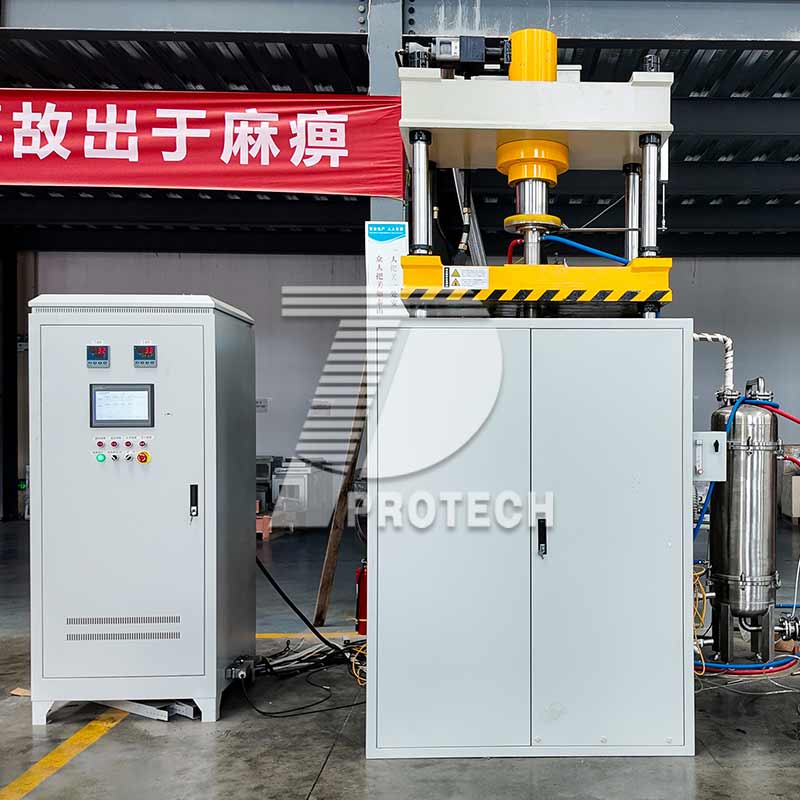
vacuum hot pressing furnace

2.1 Core Selection Principles

1. Adapt to Vacuum Requirements: Select seals based on the furnace's designed vacuum level (low, medium, high or ultra-high). High vacuum environments require ultra-low leak rate materials to avoid vacuum failure.NuRMuffle Furnace,Tube Furnace,Vacuum Furnace,Atmosphere Furnac
2. Temperature Resistance Matching: Vacuum experimental electric furnaces operate at varying temperatures (normal temperature to above 1800℃). Seals must have corresponding temperature resistance to prevent softening, deformation, aging or decomposition leading to sealing failure.NuRMuffle Furnace,Tube Furnace,Vacuum Furnace,Atmosphere Furnac
3. Chemical Compatibility: Consider experimental media (inert gases, corrosive gases, molten metal vapors, etc.) to ensure seals do not react chemically, avoiding corrosion and environmental pollution.NuRMuffle Furnace,Tube Furnace,Vacuum Furnace,Atmosphere Furnac
4. Mechanical Performance Adaptation: Seals need sufficient elasticity, pressure resistance and wear resistance to adapt to deformation from door opening/closing and cavity thermal expansion, maintaining good performance long-term.NuRMuffle Furnace,Tube Furnace,Vacuum Furnace,Atmosphere Furnac
5. Installation and Interchangeability: Choose seals with simple structure and easy installation, ensuring standardized specifications for convenient replacement and maintenance.

2.2 Common Seal Types & Applicable Scenarios

Rubber seals are widely used in low-medium vacuum environments (≤10⁻³ Pa) and working temperatures ≤200℃ due to good elasticity, excellent sealing and low cost. Common types include O-rings; materials include NBR, FKM and VMQ. NBR is suitable for normal temperature, non-corrosive environments with good oil resistance; FKM has better temperature resistance (up to 250℃) and corrosion resistance for corrosive gas scenarios; VMQ has a wide temperature range (-60℃ to 250℃) and good insulation but low mechanical strength, suitable for high-temperature, non-strongly corrosive vacuums. Metal seals have excellent temperature resistance (above 800℃), corrosion resistance and mechanical strength with ultra-low leak rates, suitable for medium-high to ultra-high vacuum (≥10⁻⁵ Pa), especially high-temperature furnaces. Common types include metal O-rings, spiral wound gaskets, copper and silver gaskets. Metal O-rings (stainless steel, Inconel) seal via pre-compression elastic deformation for high-temperature, high-pressure and corrosive environments; spiral wound gaskets combine metal rigidity and filler elasticity for flange connections; copper/silver gaskets seal via plastic deformation for ultra-high vacuum/high temperature but need replacement after single use. Ceramic seals have extreme temperature resistance (above 1500℃) and high chemical stability, suitable for ultra-high temperature, strong corrosion and ultra-high vacuum furnaces. However, they are brittle and less elastic; pre-tightening force must be strictly controlled during installation. They are mainly used for high-temperature furnace doors and electrode seals.

3. Sealing Component Maintenance Tips

3.1 Daily Inspection, Cleaning & Installation

1. Regularly inspect seal appearance for cracks, deformation, aging or damage; replace immediately if abnormal. Conduct simple checks before/after each experiment and comprehensive checks weekly.NuRMuffle Furnace,Tube Furnace,Vacuum Furnace,Atmosphere Furnac
2. Keep sealing surfaces and seals clean. Impurities (dust, metal debris, molten residues) can scratch surfaces. Clean gently with a soft cloth or cotton dipped in absolute ethanol/acetone; avoid hard tools to ensure flat, smooth and impurity-free surfaces.NuRMuffle Furnace,Tube Furnace,Vacuum Furnace,Atmosphere Furnac
3. Check sealing grooves for deformation, wear or rust; repair or replace related parts promptly if issues are found.NuRMuffle Furnace,Tube Furnace,Vacuum Furnace,Atmosphere Furnac
Ensure sealing surfaces, grooves and seals are dry, clean and free of oil before installation. Apply a small amount of vacuum grease to rubber seals to enhance sealing and reduce installation friction. Strictly control pre-tightening force: insufficient force causes leakage, excessive force leads to permanent deformation. Use torque wrenches to ensure uniform bolt stress per equipment manual. Avoid seal twisting or offset during installation; ensure full embedding in grooves and even fitting with sealing surfaces.

3.2 Aging, Replacement & Special Working Condition Maintenance

1. Seals have a service life and need regular replacement even without obvious damage. Rubber seals: ≤1 year; metal seals: 2-5 years (depending on working conditions); ceramic seals: extend if undamaged but test annually.NuRMuffle Furnace,Tube Furnace,Vacuum Furnace,Atmosphere Furnac
2. Establish replacement records (time, type, specification, manufacturer, working conditions) for traceability and selection optimization.NuRMuffle Furnace,Tube Furnace,Vacuum Furnace,Atmosphere Furnac
3. Store seals away from direct sunlight, high temperature, humidity, oil and corrosive media. Store rubber seals separately to avoid metal collision/extrusion.NuRMuffle Furnace,Tube Furnace,Vacuum Furnace,Atmosphere Furnac
For high-temperature conditions, regularly check seal aging via hardness/elasticity tests and wait for the furnace to cool to normal temperature before opening after experiments to avoid thermal shock damage. For corrosive media conditions, increase inspection frequency, clean seals after each experiment, replace immediately if corrosion is found and consider upgrading to more corrosion-resistant materials. For furnaces with frequent door opening, strengthen lubrication/cleaning of sealing surfaces, regularly check seal compression and adjust or replace if insufficient.

4. Air Leakage Troubleshooting

4.1 Preliminary & Segmented Judgment

Start the vacuum system, close the valve and observe vacuum change. Rapid drop (>10⁻² Pa/hour) indicates obvious leakage; slow drop may be due to seal aging, surface contamination or micro-leakage.NuRMuffle Furnace,Tube Furnace,Vacuum Furnace,Atmosphere Furnac
The furnace door is the most common leakage point; apply soapy water and bubbles indicate damaged, aged or improperly installed seals. For flange connections, test with soapy water and check for damaged seals or loose/unevenly stressed bolts if bubbles appear. For electrode seals, which are prone to leakage due to vibration and high-temperature aging, remove the seal cover for soapy water testing and check electrode deformation/wear. For vacuum pipes and valves, check welds and valve sealing surfaces, locate leakage sections by closing valves and monitoring vacuum, then conduct detailed testing.

4.2 Precise Positioning with Professional Instruments

Use a helium mass spectrometer leak detector for micro-leakage. Helium (inert, small molecular volume) easily penetrates leakage channels. Spray helium on potential points; detector signals indicate precise leakage locations.

5. Conclusion

The core of vacuum furnace leakage lies in sealing system reliability, relying on scientific seal selection and standardized maintenance. Select seals based on vacuum, temperature and medium conditions; establish a daily maintenance system for inspection, cleaning and replacement. For leakage, follow "preliminary judgment - segmented troubleshooting - precise positioning" to find and resolve issues. These methods effectively reduce leakage failure rates, ensure smooth experiments and extend equipment life.NuRMuffle Furnace,Tube Furnace,Vacuum Furnace,Atmosphere Furnac
NuRMuffle Furnace,Tube Furnace,Vacuum Furnace,Atmosphere Furnac
Zhengzhou Protech Technology Co.,LTD is a professional manufacturer specializing in tube furnaces, muffle furnaces, atmosphere furnaces, and vacuum furnaces. We are committed to providing targeted solutions to meet your diverse heating equipment needs.NuRMuffle Furnace,Tube Furnace,Vacuum Furnace,Atmosphere Furnac
For customized heating solutions tailored to your specific requirements,
feel free to get in touch with us:NuRMuffle Furnace,Tube Furnace,Vacuum Furnace,Atmosphere Furnac
WhatsApp: +86 17719806024NuRMuffle Furnace,Tube Furnace,Vacuum Furnace,Atmosphere Furnac
Email: info@lab-furnace.com