Zhengzhou Protech
Home > News

Product

Contact Us

Leave Message

Contact Us

All products are customizable, leave message immediately, we will reply as soon as possible.

Name

Tel/WhatsApp

E-mail *

Country *

Raw Materia

Message *

Verification code *

I can't see clearly, refresh

Differences and Selection Guide of box/Tubular/Vacuum Laboratory Furnaces

I. Core Differences Among Three Types of Laboratory FurnaceskSdMuffle Furnace,Tube Furnace,Vacuum Furnace,Atmosphere Furnac
1. Structural FeatureskSdMuffle Furnace,Tube Furnace,Vacuum Furnace,Atmosphere Furnac
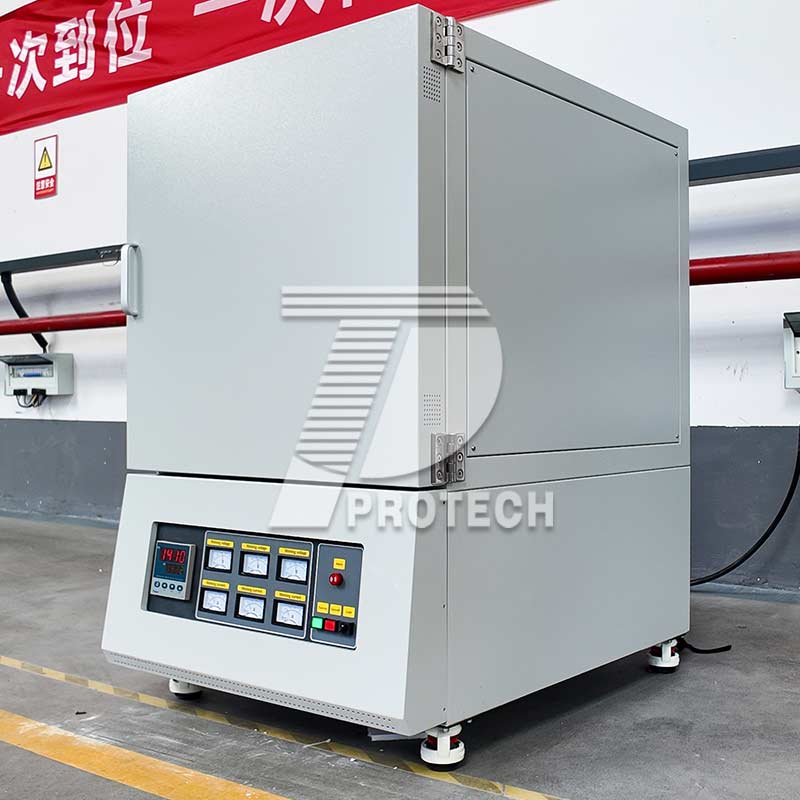
Box-type laboratory furnaces adopt an integrated box design, with the furnace body welded from cold-rolled steel plates and the chamber insulated with alumina polycrystalline fibers. They feature an open or semi-sealed structure, and some high-end models are equipped with sealed doors and silicone gaskets. With a volume range of 10-500L, covering bench-top and floor-standing models, they are suitable for batch processing of multiple parallel samples.
muffle furnace
kSdMuffle Furnace,Tube Furnace,Vacuum Furnace,Atmosphere Furnac
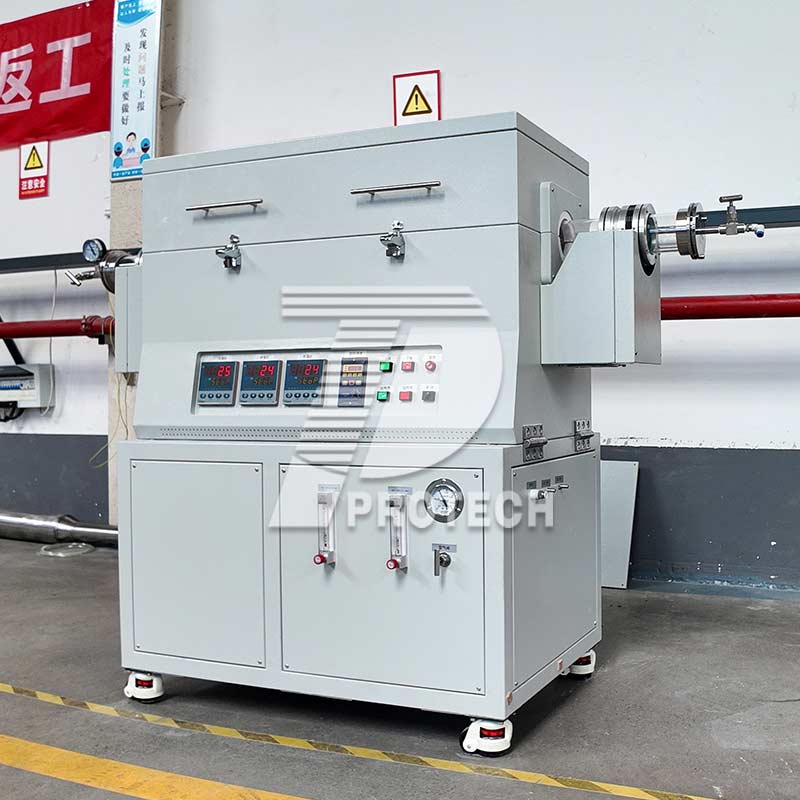
Tubular laboratory furnaces are centered on a tubular chamber, available in quartz tubes (≤1200℃, corrosion-resistant), corundum tubes (≤1600℃, high strength), and ceramic tubes (≤1400℃, cost-effective). Both ends are fitted with stainless steel sealed flanges to ensure airtightness. With a volume of 1-50L, the chamber has an inner diameter of 20-100mm and a length of 300-1500mm, ideal for small-batch directional experiments and processing of slender samples.
tube furnace
kSdMuffle Furnace,Tube Furnace,Vacuum Furnace,Atmosphere Furnac
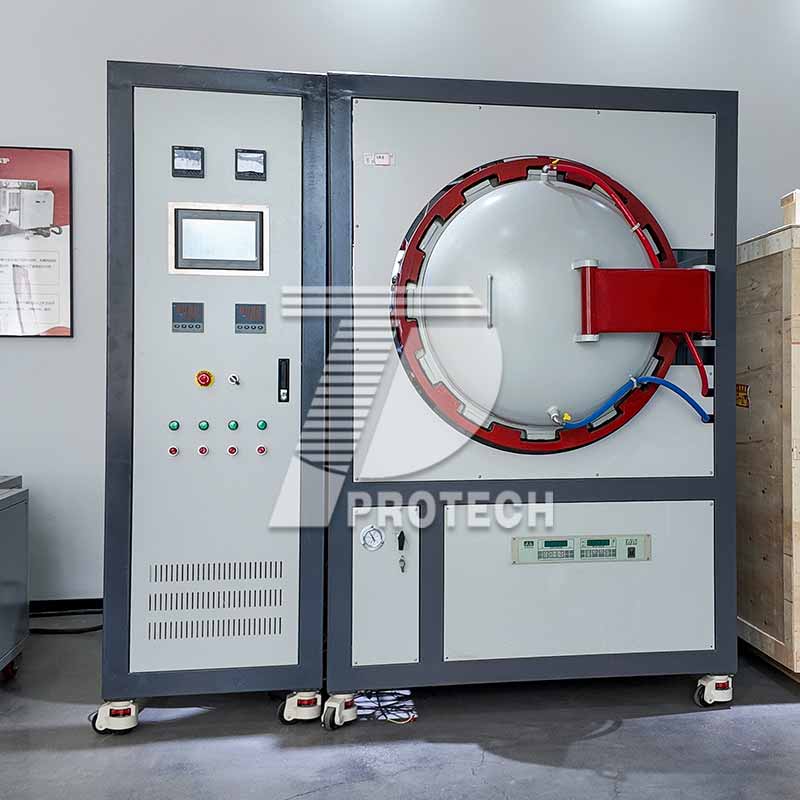
Vacuum laboratory furnaces consist of a sealed cavity, a vacuum system (vacuum pump, valves, vacuum gauge), and a heating chamber. The furnace body has a double-layer water-cooled structure with a high-temperature resistant alloy inner liner and metal gaskets suitable for high-temperature vacuum environments. With a volume of 5-100L, some models can be equipped with an inert gas circuit to achieve "vacuum-gas filling" cycles, balancing airtightness and flexibility.
vacuum furnace
kSdMuffle Furnace,Tube Furnace,Vacuum Furnace,Atmosphere Furnac
2. Heating MethodskSdMuffle Furnace,Tube Furnace,Vacuum Furnace,Atmosphere Furnac
Box-type laboratory furnaces use electric heating wires or silicon carbide rods for three-dimensional heating, with a temperature uniformity of ±3-5℃. Low-temperature models (≤1000℃) adopt nickel-chromium heating wires, medium-high temperature models (1000-1600℃) use silicon carbide rods, and high-temperature models (1600-1800℃) are equipped with molybdenum disilicide rods. Equipped with a PID intelligent temperature controller, they support multi-segment program heating (0.1-20℃/min), suitable for conventional experiments such as annealing, sintering, and ashing.kSdMuffle Furnace,Tube Furnace,Vacuum Furnace,Atmosphere Furnac
kSdMuffle Furnace,Tube Furnace,Vacuum Furnace,Atmosphere Furnac
Tubular laboratory furnaces use tubular heating elements wrapped around the chamber, with a temperature control accuracy of ±2℃. Some models adopt three-zone heating, achieving an axial temperature gradient of ≤1℃/100mm. The maximum temperature is 1600℃ (corundum tube) and ≤1200℃ for quartz tube models, with a heating rate of 5-10℃/min and higher cooling efficiency than box-type furnaces. They are suitable for high-precision directional heating scenarios such as chemical vapor deposition, catalytic reactions, and crystal growth.kSdMuffle Furnace,Tube Furnace,Vacuum Furnace,Atmosphere Furnac
kSdMuffle Furnace,Tube Furnace,Vacuum Furnace,Atmosphere Furnac
Vacuum laboratory furnaces use resistance heating (molybdenum wire/tungsten wire/graphite, 600-1800℃) or induction heating (sample self-heating, maximum 2000℃). The vacuum environment significantly reduces heat loss, with a temperature control accuracy of ±1℃ and a heating rate of 0.5-15℃/min. Heating elements have no oxidative loss and longer service life, suitable for high-temperature and high-precision experimental needs.kSdMuffle Furnace,Tube Furnace,Vacuum Furnace,Atmosphere Furnac
kSdMuffle Furnace,Tube Furnace,Vacuum Furnace,Atmosphere Furnac
3. Atmosphere ControlkSdMuffle Furnace,Tube Furnace,Vacuum Furnace,Atmosphere Furnac
Box-type laboratory furnaces default to an atmospheric air environment, and some can be modified for inert gas protection with an atmosphere purity of ≥95%, only meeting general protection needs and not suitable for high-purity atmosphere experiments.kSdMuffle Furnace,Tube Furnace,Vacuum Furnace,Atmosphere Furnac
kSdMuffle Furnace,Tube Furnace,Vacuum Furnace,Atmosphere Furnac
Tubular laboratory furnaces support the circulation and static maintenance of vacuum, inert gases, reducing/oxidizing gases. In circulation mode, the gas flow rate is 0.1-10L/min; in static mode, it can be achieved by vacuum pumping and gas filling, with an atmosphere purity of ≥99.9% (up to 99.99% for high-end models). They are suitable for experiments requiring specific gas environments such as hydrogen reduction, nitridation, and oxidation.kSdMuffle Furnace,Tube Furnace,Vacuum Furnace,Atmosphere Furnac
kSdMuffle Furnace,Tube Furnace,Vacuum Furnace,Atmosphere Furnac
The core advantage of vacuum laboratory furnaces lies in vacuum degree control: a single mechanical pump can reach 10⁻²Pa, and with a diffusion pump/molecular pump, it can reach 10⁻⁵~10⁻⁷Pa, with an oxygen content of ≤1ppm. They effectively avoid sample oxidation and nitridation, suitable for high-precision scenarios such as processing of oxidation-sensitive materials and vacuum smelting.kSdMuffle Furnace,Tube Furnace,Vacuum Furnace,Atmosphere Furnac
kSdMuffle Furnace,Tube Furnace,Vacuum Furnace,Atmosphere Furnac
4. Application ScenarioskSdMuffle Furnace,Tube Furnace,Vacuum Furnace,Atmosphere Furnac
Box-type laboratory furnaces: Cost-effective and easy to operate, they are suitable for basic experiments in university laboratories and batch trial production in enterprises, such as electronic component drying, hardware annealing, and ceramic bisque firing. With minimal restrictions on sample shape and size, they are the most widely used type.kSdMuffle Furnace,Tube Furnace,Vacuum Furnace,Atmosphere Furnac
kSdMuffle Furnace,Tube Furnace,Vacuum Furnace,Atmosphere Furnac
Tubular laboratory furnaces: With good airtightness and controllable gas environment, they are applicable in materials science (thin film preparation, nano-synthesis), chemical engineering (gas-solid catalytic reactions), metallurgy (metal powder reduction), etc. They can simulate industrial tubular reactor conditions and support continuous feeding and discharging.kSdMuffle Furnace,Tube Furnace,Vacuum Furnace,Atmosphere Furnac
kSdMuffle Furnace,Tube Furnace,Vacuum Furnace,Atmosphere Furnac
Vacuum laboratory furnaces: Featuring a pure environment and high precision, they are used in high-end scenarios such as aerospace (vacuum brazing), electronic information (semiconductor purification), precious metal processing (vacuum smelting), and nuclear industry (radioactive sample processing), enabling experiments impossible under atmospheric pressure.
kSdMuffle Furnace,Tube Furnace,Vacuum Furnace,Atmosphere Furnac
II. Core Technical Points for SelectionkSdMuffle Furnace,Tube Furnace,Vacuum Furnace,Atmosphere Furnac
Temperature Requirement: For ≤1200℃, choose box-type/tubular furnaces (box-type for batch processing, tubular for slender samples/atmosphere requirements); for 1200-1600℃, select medium-high temperature box-type (silicon carbide rods) or tubular (corundum tube) furnaces; for 1600-2000℃, vacuum furnaces are preferred. For rapid heating (≥5℃/min), choose tubular/vacuum furnaces; for slow heating (≤1℃/min), box-type furnaces offer better stability.kSdMuffle Furnace,Tube Furnace,Vacuum Furnace,Atmosphere Furnac
kSdMuffle Furnace,Tube Furnace,Vacuum Furnace,Atmosphere Furnac
Atmosphere Requirement: For inert/reducing/oxidizing gases with purity ≥99.9%, select tubular furnaces; for vacuum (≥10⁻²Pa) or sealed treatment of toxic gases, choose vacuum furnaces; for atmospheric pressure without special requirements, box-type furnaces are suitable, and models with inert gas interfaces can be selected for future upgrading.kSdMuffle Furnace,Tube Furnace,Vacuum Furnace,Atmosphere Furnac
kSdMuffle Furnace,Tube Furnace,Vacuum Furnace,Atmosphere Furnac
Sample Characteristics: For large samples (>5L)/batch processing, choose box-type furnaces; for slender samples/continuous reaction experiments, select tubular furnaces; for volatile/oxidation-sensitive/high-purity samples, vacuum furnaces are ideal. When dust or corrosive gases are generated, prioritize tubular/vacuum furnaces with quartz/corundum chambers.kSdMuffle Furnace,Tube Furnace,Vacuum Furnace,Atmosphere Furnac
kSdMuffle Furnace,Tube Furnace,Vacuum Furnace,Atmosphere Furnac
Precision Requirement: For temperature control within ±1℃, atmosphere purity >99.99%, or stable vacuum degree of 10⁻⁴Pa, choose vacuum/tubular furnaces; for general precision (temperature control ±5℃, atmosphere purity ≥95%), economic box-type furnaces are suitable.kSdMuffle Furnace,Tube Furnace,Vacuum Furnace,Atmosphere Furnac
kSdMuffle Furnace,Tube Furnace,Vacuum Furnace,Atmosphere Furnac
Selection Pitfall Tips:kSdMuffle Furnace,Tube Furnace,Vacuum Furnace,Atmosphere Furnac
Avoid blindly pursuing high temperatures to prevent waste of procurement and operation costs;kSdMuffle Furnace,Tube Furnace,Vacuum Furnace,Atmosphere Furnac
Match the chamber material with the experimental medium (e.g., avoid hydrofluoric acid for quartz tubes);kSdMuffle Furnace,Tube Furnace,Vacuum Furnace,Atmosphere Furnac
Consider the overall operation cost—do not choose vacuum furnaces if no vacuum environment is needed;kSdMuffle Furnace,Tube Furnace,Vacuum Furnace,Atmosphere Furnac
Reserve a 100-200℃ safety margin for the maximum temperature to extend equipment service life;kSdMuffle Furnace,Tube Furnace,Vacuum Furnace,Atmosphere Furnac
Prioritize models with safety protection functions such as over-temperature protection, leakage protection, and leakage alarm.kSdMuffle Furnace,Tube Furnace,Vacuum Furnace,Atmosphere Furnac
kSdMuffle Furnace,Tube Furnace,Vacuum Furnace,Atmosphere Furnac
Zhengzhou Protech Technology Co.,LTD is a professional manufacturer specializing in tube furnaces, muffle furnaces, atmosphere furnaces, and vacuum furnaces. We are committed to providing targeted solutions to meet your diverse heating equipment needs.kSdMuffle Furnace,Tube Furnace,Vacuum Furnace,Atmosphere Furnac
For customized heating solutions tailored to your specific requirements, feel free to get in touch with us:
kSdMuffle Furnace,Tube Furnace,Vacuum Furnace,Atmosphere Furnac
WhatsApp: +86 17719806024kSdMuffle Furnace,Tube Furnace,Vacuum Furnace,Atmosphere Furnac
Email: info@lab-furnace.com