Zhengzhou Protech
Home > News

Product

Contact Us

Leave Message

Contact Us

All products are customizable, leave message immediately, we will reply as soon as possible.
Name

Tel/WhatsApp

E-mail *

Country *

Raw Materia

Message *

Verification code *

I can't see clearly, refresh

Summary of Heat Treatment Processes for Various Materials in Rotary Tube Furnaces​

1. Introduction​MndMuffle Furnace,Tube Furnace,Vacuum Furnace,Atmosphere Furnac
Rotary tube furnaces have become indispensable heat treatment equipment in materials science and industrial production, thanks to their advantages of uniform temperature fields, continuous operation capability, and flexible atmosphere control. Whether for the strengthening of metallic materials, the sintering of ceramic materials, or the modification of polymer materials, rotary tube furnaces can optimize the microstructure and performance of materials by precisely regulating parameters such as temperature, atmosphere, and rotation speed. This article systematically summarizes the typical heat treatment processes for different types of materials in rotary tube furnaces, providing references for research and production in related fields.
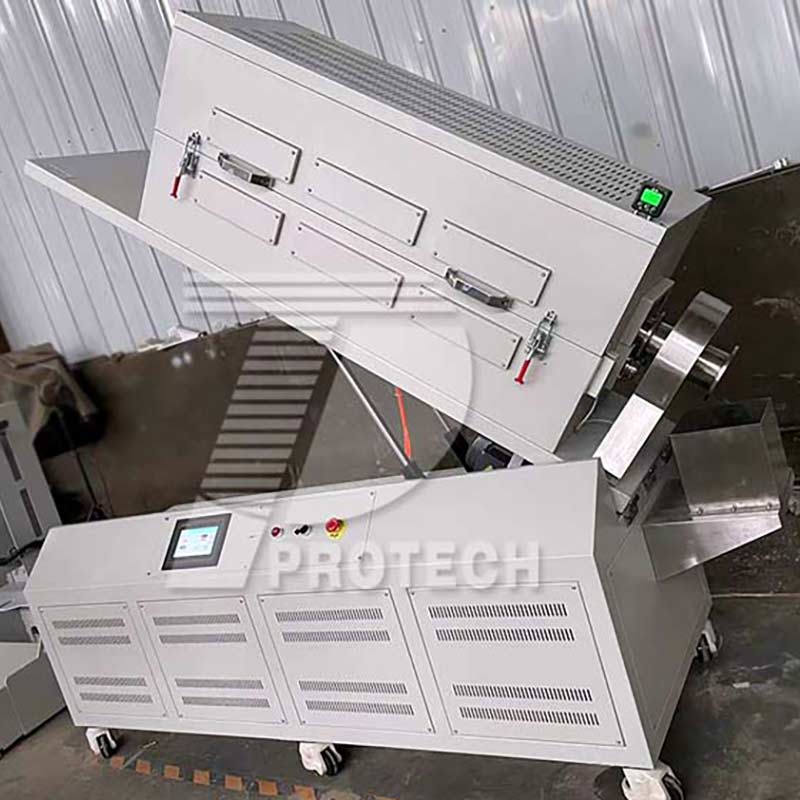
rotary tube furnace
2. Detailed Heat Treatment Processes for Major Materials​MndMuffle Furnace,Tube Furnace,Vacuum Furnace,Atmosphere Furnac
(1) Metallic Materials and Alloys​MndMuffle Furnace,Tube Furnace,Vacuum Furnace,Atmosphere Furnac
The core goal of heat treatment for metallic materials is to improve mechanical properties (e.g., strength, hardness, toughness) or optimize processability, which aligns with the core requirements of the continuous heating and atmosphere protection functions of rotary tube furnaces.​MndMuffle Furnace,Tube Furnace,Vacuum Furnace,Atmosphere Furnac
Process Types: Annealing, normalizing, quenching, tempering, carburizing/nitriding.​MndMuffle Furnace,Tube Furnace,Vacuum Furnace,Atmosphere Furnac
Key Parameters: Heating temperature (500-1200°C, adjusted according to alloy composition), holding time (0.5-6 hours), cooling rate (air cooling, oil cooling, water cooling, or furnace cooling), atmosphere type (inert gases such as argon and nitrogen, reducing atmospheres such as hydrogen, and carburizing atmospheres such as a mixture of methane and nitrogen).​MndMuffle Furnace,Tube Furnace,Vacuum Furnace,Atmosphere Furnac
Typical Applications:​MndMuffle Furnace,Tube Furnace,Vacuum Furnace,Atmosphere Furnac
Carbon Steel/Alloy Steel: Annealing at 650-850°C to eliminate processing stress and improve ductility; oil quenching at 850-950°C followed by tempering at 500-600°C to achieve a balanced combination of high strength and toughness.​MndMuffle Furnace,Tube Furnace,Vacuum Furnace,Atmosphere Furnac
Aluminum Alloys: Solution treatment at 300-400°C followed by rapid cooling, then aging at 150-200°C to precipitate strengthening phases and enhance hardness.​MndMuffle Furnace,Tube Furnace,Vacuum Furnace,Atmosphere Furnac
Stainless Steel: Solution treatment at 1050-1150°C to remove carbides and improve corrosion resistance; a hydrogen-reducing atmosphere is used to prevent oxidation during heating.​
MndMuffle Furnace,Tube Furnace,Vacuum Furnace,Atmosphere Furnac
(2) Ceramic Materials​MndMuffle Furnace,Tube Furnace,Vacuum Furnace,Atmosphere Furnac
The heat treatment of ceramic materials focuses on sintering, which promotes intergranular diffusion and densification at high temperatures, reduces porosity, and enhances mechanical strength and high-temperature resistance.​MndMuffle Furnace,Tube Furnace,Vacuum Furnace,Atmosphere Furnac
Process Types: Atmospheric pressure sintering, atmosphere sintering, two-step pre-sintering-sintering.​MndMuffle Furnace,Tube Furnace,Vacuum Furnace,Atmosphere Furnac
Key Parameters: Sintering temperature (1200-1800°C, depending on ceramic composition), holding time (2-10 hours), heating/cooling rate (5-20°C/min to avoid thermal stress cracking), atmosphere (air, inert gas, or vacuum; oxide ceramics can be sintered in air, while non-oxide ceramics such as silicon nitride require sintering in a nitrogen atmosphere).​MndMuffle Furnace,Tube Furnace,Vacuum Furnace,Atmosphere Furnac
Typical Applications:​MndMuffle Furnace,Tube Furnace,Vacuum Furnace,Atmosphere Furnac
Alumina Ceramics: Sintering in air at 1500-1700°C with a holding time of 4-6 hours, achieving a density of over 95%, used in wear-resistant parts and insulating materials.​MndMuffle Furnace,Tube Furnace,Vacuum Furnace,Atmosphere Furnac
Zirconia Ceramics: Sintering at 1400-1600°C with yttrium oxide as a stabilizer to obtain a tetragonal structure, featuring excellent fracture toughness, applied in dental restorations and industrial cutting tools.​MndMuffle Furnace,Tube Furnace,Vacuum Furnace,Atmosphere Furnac
Silicon Carbide Ceramics: Sintering in argon at 1700-1800°C with sintering aids such as boron and carbon to improve densification, used in high-temperature structural components and semiconductor epitaxial substrates.​
MndMuffle Furnace,Tube Furnace,Vacuum Furnace,Atmosphere Furnac
(3) Polymer Materials​MndMuffle Furnace,Tube Furnace,Vacuum Furnace,Atmosphere Furnac
Heat treatment of polymer materials mainly includes heat setting, cross-linking modification, and degradation recycling. It optimizes material performance by regulating temperature to achieve molecular chain rearrangement or chemical reactions.​MndMuffle Furnace,Tube Furnace,Vacuum Furnace,Atmosphere Furnac
Process Types: Heat setting, annealing, cross-linking treatment, thermal degradation.​MndMuffle Furnace,Tube Furnace,Vacuum Furnace,Atmosphere Furnac
Key Parameters: Treatment temperature (80-300°C, below the material decomposition temperature), holding time (0.5-4 hours), atmosphere (air, inert gas, or vacuum; oxidation-prone materials require inert gas protection), rotation speed (10-30 rpm to ensure uniform heating).​MndMuffle Furnace,Tube Furnace,Vacuum Furnace,Atmosphere Furnac
Typical Applications:​MndMuffle Furnace,Tube Furnace,Vacuum Furnace,Atmosphere Furnac
Plastic Films (e.g., PET, PP): Heat setting at 100-150°C to eliminate internal stress generated during processing and improve dimensional stability.​MndMuffle Furnace,Tube Furnace,Vacuum Furnace,Atmosphere Furnac
Thermosetting Resins (e.g., epoxy resins): Cross-linking and curing at 120-180°C to promote complete curing reactions, enhancing bonding strength and temperature resistance.​MndMuffle Furnace,Tube Furnace,Vacuum Furnace,Atmosphere Furnac
Waste Plastic Recycling: Thermal degradation in an inert gas atmosphere at 250-300°C to decompose into small-molecule hydrocarbons, enabling resource recycling.​
MndMuffle Furnace,Tube Furnace,Vacuum Furnace,Atmosphere Furnac
(4) Composite Materials​MndMuffle Furnace,Tube Furnace,Vacuum Furnace,Atmosphere Furnac
Heat treatment of composite materials (e.g., metal-matrix, ceramic-matrix, and polymer-matrix composites) requires balancing the compatibility between the matrix and reinforcement phases. By synergistically regulating process parameters, the interface bonding strength and overall performance are improved.​MndMuffle Furnace,Tube Furnace,Vacuum Furnace,Atmosphere Furnac
Process Types: Matrix strengthening heat treatment, interface optimization heat treatment, composite sintering.​MndMuffle Furnace,Tube Furnace,Vacuum Furnace,Atmosphere Furnac
Key Parameters: Temperature (must match the heat treatment temperature of the matrix material to avoid reinforcement phase failure), atmosphere (protects the matrix from oxidation while preventing excessive interface reactions), holding time (ensures sufficient interface diffusion and reaction).​MndMuffle Furnace,Tube Furnace,Vacuum Furnace,Atmosphere Furnac
Typical Applications:​MndMuffle Furnace,Tube Furnace,Vacuum Furnace,Atmosphere Furnac
Carbon Fiber-Reinforced Epoxy Composites: Curing at 120-150°C to fully cross-link the resin, ensuring tight bonding between carbon fibers and the matrix, used in aerospace structural components.​MndMuffle Furnace,Tube Furnace,Vacuum Furnace,Atmosphere Furnac
Silicon Carbide Particle-Reinforced Aluminum Matrix Composites: Solution treatment at 450-550°C followed by aging at 180-220°C, which not only enhances the strength of the aluminum matrix but also utilizes the dispersion strengthening effect of silicon carbide particles to improve wear resistance.​MndMuffle Furnace,Tube Furnace,Vacuum Furnace,Atmosphere Furnac
Hydroxyapatite/Titanium Alloy Biocomposites: Heat treatment in an argon atmosphere at 800-1000°C to optimize interface bonding, enhance biocompatibility and mechanical stability, used in bone repair implants.​
MndMuffle Furnace,Tube Furnace,Vacuum Furnace,Atmosphere Furnac
3. Key Points for Process Optimization​MndMuffle Furnace,Tube Furnace,Vacuum Furnace,Atmosphere Furnac
Temperature Control: The temperature uniformity of the rotary tube furnace directly affects the material treatment effect. Regular calibration of the furnace temperature is necessary, and a reasonable heating/cooling rate should be set according to material characteristics to avoid performance defects caused by local overheating or excessive temperature differences.​MndMuffle Furnace,Tube Furnace,Vacuum Furnace,Atmosphere Furnac
Atmosphere Regulation: An appropriate atmosphere should be selected based on the chemical properties of different materials. For example, oxidation-prone materials require strict control of oxygen content, and carburizing/nitriding processes need precise adjustment of atmosphere component ratios to ensure process stability.​MndMuffle Furnace,Tube Furnace,Vacuum Furnace,Atmosphere Furnac
Rotation Speed and Loading: The rotation speed should be adjusted according to the material form (powder, particles, blocks), generally 5-30 rpm, to ensure uniform heating and atmosphere contact of the material. The loading amount should not be excessive to avoid local process failure due to accumulation.​MndMuffle Furnace,Tube Furnace,Vacuum Furnace,Atmosphere Furnac
Post-Treatment: Some materials require subsequent processing after heat treatment, such as shot blasting for metallic materials, grinding for ceramic materials, and cutting for polymer materials, to further optimize surface quality and dimensional accuracy.​
MndMuffle Furnace,Tube Furnace,Vacuum Furnace,Atmosphere Furnac
4. Conclusion​MndMuffle Furnace,Tube Furnace,Vacuum Furnace,Atmosphere Furnac
The versatility of rotary tube furnaces allows them to adapt to the heat treatment needs of various materials, including metals, ceramics, polymers, and composites. Precise regulation of process parameters is the core to achieving material performance optimization. With the development of materials science, the upgrading of rotary tube furnaces in terms of atmosphere diversity, temperature accuracy, and automation will further expand their application scenarios. In the future, it is necessary to combine the microstructure evolution mechanism of materials, conduct in-depth research on the relationship between process parameters and performance, provide theoretical support for customized heat treatment processes, and promote the high-quality development of the materials industry.MndMuffle Furnace,Tube Furnace,Vacuum Furnace,Atmosphere Furnac
MndMuffle Furnace,Tube Furnace,Vacuum Furnace,Atmosphere Furnac
Zhengzhou Protech Technology Co.,LTD is a professional manufacturer specializing in tube furnaces, muffle furnaces, atmosphere furnaces, and vacuum furnaces. We are committed to providing targeted solutions to meet your diverse heating equipment needs.MndMuffle Furnace,Tube Furnace,Vacuum Furnace,Atmosphere Furnac
For customized heating solutions tailored to your specific requirements,
feel free to get in touch with us:MndMuffle Furnace,Tube Furnace,Vacuum Furnace,Atmosphere Furnac
WhatsApp: +86 17719806024MndMuffle Furnace,Tube Furnace,Vacuum Furnace,Atmosphere Furnac
Email: info@lab-furnace.com